
There's a real difference between a craving that means your body actually needs fuel and a craving that's just habit talking at a predictable hour — and almost nobody tells you how to tell them apart until it's already cost them a screening result they didn't expect.
Quick disclosure before I go further: some of the links in this piece are affiliate links, meaning I earn a small commission if you buy through them, at no extra cost to you. I only write about things I've actually folded into my own low-GI routine, and that's true of everything mentioned below.
Is a Midday Craving Hunger, or Just Habit?
Here is the thing about most midday cravings: they're rarely about the clock itself. They're about what happened at breakfast, what happened at lunch, and sometimes what happened in a conference room hours earlier where a catering tray did more damage than anyone noticed — something I went deep on in Why My Corporate Wellness Catering Was Actually Sabotaging My Blood Sugar. The real wake-up call for me wasn't a number on a printout. It was watching the pen in my nurse practitioner's hand go still for a second too long when she got to the A1C column. That pause said more than the chart did.
A craving that's genuine hunger tends to build slowly and will accept almost any reasonably filling food. A craving that's habit shows up fast, wants something specific and sweet, and usually has a trigger attached to it — a meeting, a smell drifting from the break room, a dip in focus. Pausing to ask which one I was actually having, before reaching for anything, did more for me than any single food swap ever did.
The Glycemic Load Question Nobody Asks at Lunch
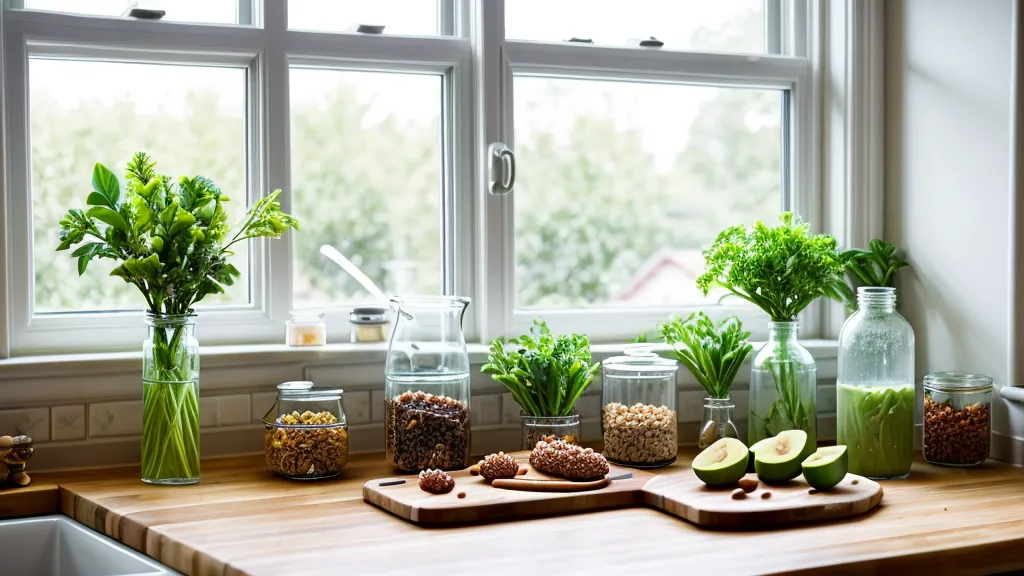
Most people have heard of glycemic index. Fewer stop to think about glycemic load — the gap between how a food ranks on a chart and how a realistic portion of it actually behaves once it hits your bloodstream — and that gap is exactly where a lot of standard advice quietly falls apart. A smoothie that looks virtuous on the label can still send your glucose up fast if it's mostly fruit with nothing to slow it down, and pairing carbohydrate with protein at the same meal is one of the simplest ways to flatten that curve. I don't do math at my desk. I just check whether what's on my plate has something slow sitting next to something fast.
What Does Sugar Defender Actually Change by Midafternoon?
This is where Sugar Defender fits into my routine, and I want to be upfront about what it does and doesn't do. It's a liquid dropper formula built around 24 plant-based ingredients, and the company backs it with a 180-day money-back guarantee, which took away a lot of the risk of actually trying it long enough to know. The taste is not subtle — it's earthy, almost bitter, closer to a strong herbal tincture than anything you'd call a treat. I stir it into black coffee most mornings, and the bitterness mostly disappears into the roast. What it changed for me wasn't willpower. It was the size of the gap between meals where I used to feel desperate enough to negotiate with a vending machine.
Diet Soda Never Actually Fixed My Cravings

Before the drops, I tried the obvious shortcut: swapping regular soda for diet soda and leaning hard on artificial sweeteners in my coffee, my yogurt, basically anything that would let me keep sweetness without sugar. It did not fix the craving. Not even close. If anything, it kept the want for sweet alive and well-fed, just wearing a different ingredient list — my brain still wanted the hit, and the sweetener made it easier to justify having one more. Missing real sweetness turned out to be a different problem than missing real food, and I wrote more about that second kind of grief in The White Bread Mourning Period: Finding My Low-GI Peace. Neither problem gets solved by swapping one sweet thing for a chemical copy of it.
Checking In Before I Give In to a Craving
A few checks happen almost automatically now before I let myself reach for anything. Breakfast is protein-forward most days — eggs with spinach, or a bowl of oats I stir together at the counter, the batter thick enough that it drags against the spoon and resists the first fold before it finally loosens up. Starting the day without refined carbs means the morning doesn't set up an afternoon crash later. At lunch, the plate gets built around fiber and protein first, and if there's a complex carb like lentils or chickpeas in the mix, the portion stays moderate. Dehydration gets ruled out next — office air is dry, and a lot of what feels like a desperate sugar urge by early afternoon is really just thirst wearing a disguise, so I finish a full water bottle before I even consider a snack. If none of that settles it and I genuinely need fuel, the move is fat and protein, never a plain carb by itself — a small bag of roasted almonds from Costco, or a packet of unsweetened sunflower butter, the kind of thing I'd pick up on a regular run to the QFC on Aurora Avenue North for everything else.
Doesn't Exercise Already Take Care of This?
People assume that if you're active enough, blood sugar should sort itself out, and I get why — moving muscle does help clear glucose from your bloodstream faster. But a friend of mine does CrossFit at a box gym three mornings a week, is in genuinely great shape, and still tells me they get hit by the same afternoon wall I used to get hit by. Exercise changes the equation. It doesn't erase it. It's one input among several, not a free pass to eat however you want for the rest of the day.
Reading Labels Differently at the Grocery Store
The label-reading habit is the other quiet shift. Sugar doesn't always show up labeled as sugar — it hides under names like dextrose, maltose, and rice syrup, a dozen others that don't sound sweet at all, and a lot of so-called healthy granola or yogurt is loaded with them. I don't do a full ingredient audit standing in the aisle. I scan for anything ending in "-ose" or any syrup sitting near the top of the list, and that alone changes what ends up in the cart. It's not about becoming the label police for anyone else — I've learned not to lecture coworkers about their lunch choices — it's about not getting ambushed by something I assumed was fine.
Is This a Fix, or Just a Steadier Floor?
None of this fixes prediabetes on its own, and I'd be lying if I said it did. What changed is the floor underneath me — the baseline I'm working from before any of my own food choices even come into play. I wrote more about what that steadier baseline actually looks like day to day in My Low-GI Lab Notes: Finding Metabolic Balance After a Failed Wellness Screening. If your afternoons feel like a constant negotiation with yourself over vending machine food, you don't have to solve it with willpower alone. Pairing a steadier floor — whether that's better meal timing, more protein at breakfast, or a plant-based formula like Sugar Defender — with real changes to what's actually on your plate is what moved things for me. Just don't expect it to undo a bakery box of pastries by itself, and talk to your own doctor before adding anything new, especially if you're already on medication for blood sugar.