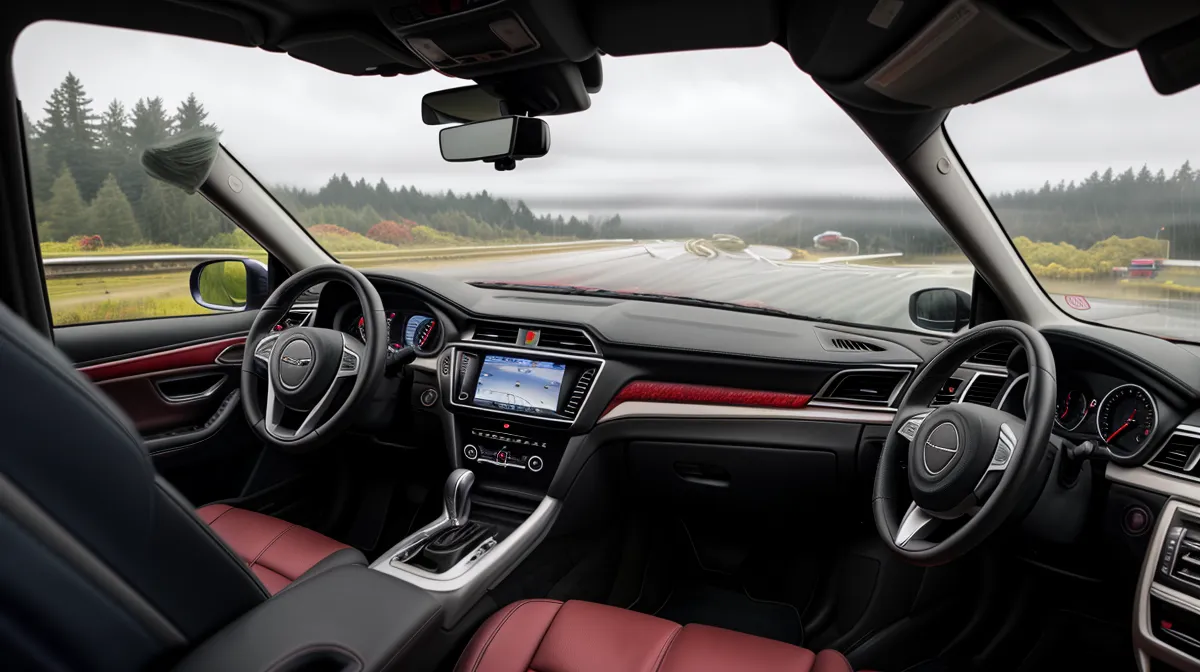
A gas station yogurt and a handful of raw almonds fit in the exact same cupholder, but only one of them sent my glucose monitor to 142 before I'd even merged onto I-5. That's the strange arithmetic of eating low-GI while commuting; the food looks almost identical from the outside, and the numbers tell a completely different story once you're actually moving. Three years past a workplace wellness screening that flagged me as prediabetic, I've turned my daily crawl from the Seattle suburbs down to Renton into a rolling test kitchen, mostly out of necessity.
Quick disclosure before we get into it: some of the links below are affiliate links, and I earn a small commission if you buy through them, at no extra cost to you. I only mention products I've actually tried on my own commute, so treat this as one HR manager's field notes, not a professional recommendation.
Short answer, since that's usually the first question people ask: yes, it's possible to stay low-GI from behind the wheel, but only once you stop treating the car like a snack drawer and start treating whatever's in it as an actual meal, planned the night before, with protein and fiber doing the heavy lifting instead of whatever's closest to the register.
The Low-GI Habit That Backfired Before I Left the Driveway
Here's the thing: my first attempt at fixing this had nothing to do with the car at all. I tried locking myself into a rigid three-meals-a-day, no-snacking-between schedule, the kind every old-school diet book swears by. Cutting off snacks completely just meant I was raiding the vending machine outside the break room most afternoons, grabbing whatever was fastest because I was too hungry to think about glycemic anything.
What actually fixed the 3 PM crash wasn't willpower, it was pairing anything sweet with protein or fat so my blood sugar didn't overshoot and then dive; the same mechanism that shows up if you look into reactive hypoglycemia, though that's a deeper rabbit hole than one commute post can cover. Rigid schedules ignore how hungry a body actually gets sitting in traffic, and mine punished me for it every single time.
Syrup in Your Coffee's Impact on Your Commute
Coffee turned out to matter more than I expected. Syrup and whipped cream used to be my whole personality in a to-go cup, and that alone was enough to set the tone for a rough morning before I'd even left the neighborhood. Managing the glycemic load of the entire morning (not just breakfast) meant coffee had to stop being a dessert.
These days I add a dropper of Sugar Defender to my coffee instead, mostly because the liquid format is easy to mix in without changing my routine. It has an earthy taste I won't pretend to love, and it's not a substitute for actually changing what I eat (the label practically says so), but it's become part of the ritual that tells my brain we're staying steady today, and with a 180-day guarantee I didn't feel like I was gambling much by trying it.
Smoothies, Fruit, and Whether They're Safe at 7 AM
People assume a smoothie is automatically the safe commute breakfast, and that one surprised me too. Blending fruit breaks its fiber structure down enough that the sugar hits your system almost as fast as juice would, which is the exact glucose-spike problem that trips up a lot of otherwise careful eaters. Whole fruit behaves differently in the body than juiced or blended fruit, partly because of how fructose gets processed once that fiber structure is gone instead of intact.
Stocking a Car That Won't Spike Your Numbers
Raw walnuts and celery with almond butter replaced the granola bars in my glovebox, and that swap alone did more than almost anything else I tried. Fiber is the boring part of this whole equation, but soluble fiber specifically slows down how fast anything digests, which matters when you can't get up and walk around for another hour. Cold, cooked-and-cooled potatoes or rice develop a kind of resistant starch that your body handles more like fiber than starch, though that's a whole separate experiment from what fits in a lunch bag on a Tuesday.
Pasta is trickier, since how it's cooked changes how fast it digests; the starch gelatinization that happens as the granules absorb water and swell is part of why an overcooked noodle spikes you harder than one left slightly firm. A splash of vinegar on whatever salad rides along in the passenger seat also seems to blunt the after-meal number, likely something to do with acetic acid slowing digestion, though I only trust that one anecdotally. And I've stopped assuming a label is safe just because it says "natural"; plenty of shelf-stable snacks carry sugars the ingredient list doesn't shout about, which is its own research project I haven't finished.
Movement Before the Freeway Actually Matters
Muscles pull glucose out of the bloodstream almost on demand once they're working, which is the whole reason a short walk matters more than people think, and a commute is exactly where that window is hardest to find. The parking garage and the stairwell up to my desk are basically the only movement I get before hours sitting still between the drive in and a desk job, so I use them on purpose instead of taking the elevator like everyone else. It's a small trade, but it's the one piece of this that costs nothing.
Supplements Are Not a Replacement for the Food Changes
The ingredient that sent me down a research hole in the first place was Maqui berry, a superfruit people online swear helps the kidneys clear out extra glucose, and I added a bottle of GlucoBerry to the rotation partly because it leans on that different mechanism and partly because it was the more affordable of the two supplements I was already using. One capsule a day is about as low-effort as a supplement routine gets, which matters when you're already stretched thin getting out the door.
None of this replaces the food, though, and I say that as someone who wanted a shortcut as badly as anyone. Insulin sensitivity is the deeper question underneath most of this; it's the same concept that comes up when people ask me about intermittent fasting, and a dropper or a capsule can support that conversation without ever being the whole answer to it.
Measuring What's Actually Working
Numbers still matter more to me than feelings, probably because I spent years reading spreadsheets for a living. Swapping white rice for cauliflower rice was the moment that convinced me the small stuff adds up; my glucometer read 112 after that dinner, where I'd braced for something closer to 156 based on how similar meals used to hit me. A1C is the slower number, the one that averages everything out over months instead of one dinner, and it's a more honest scoreboard than any single reading no matter how good or bad that reading feels in the moment.
A reader named Corbin emailed me after leaving a pretty skeptical comment on that cauliflower rice post (he didn't believe it could ever actually satisfy anyone), and he still checks in now and then, half the time grumbling about texture, but honest enough to admit when something worked better than he expected it to.
Before You Ever Hit the On-Ramp
My neighbor Greta, who's skeptical of pretty much anything that sounds remotely diet-adjacent, tried the cauliflower rice anyway and admitted it didn't taste like punishment, which felt like a genuine win. Mornings matter just as much as anything that happens in the car. If you're already fighting Managing the Dawn Phenomenon: My Seattle Morning Routine before you back out of the driveway, no amount of dashboard planning fixes that on its own.
If you want the deeper breakdown of how the drops specifically worked for me, I wrote a full Sugar Defender Review covering that in more detail than fits here. Prediabetes doesn't have to mean giving up your commute routine or your sanity, just being a little more intentional about what rides along with you. Grab a kit that works for your own car, skip the gas station shelf, and if the kidney-support angle interests you, GlucoBerry is worth a look since it's the more budget-friendly option of the two I've actually used.