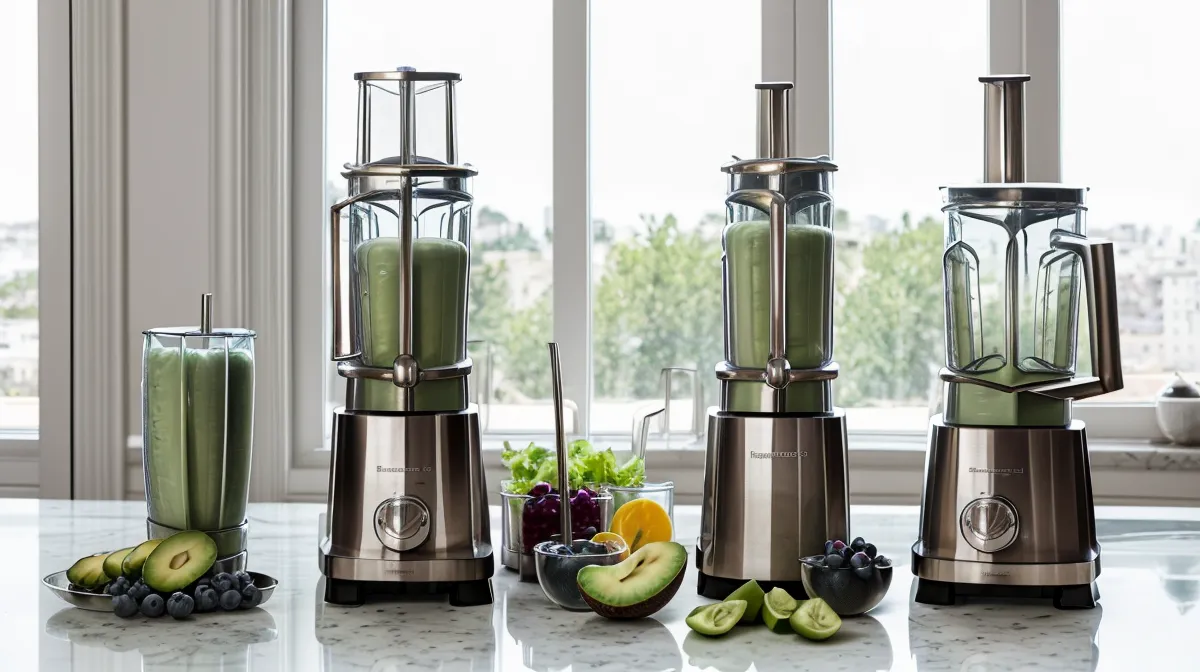
The blender is still running when I pour the first glass (thick, orange-pink, cold enough to fog the glass on a cool morning) and I used to call this my low-GI win of the day. A continuous glucose monitor does not care how virtuous a smoothie looks, though. Mine had already caught the real pattern before I ever sat down and read it: this 'healthy' habit was working against the metabolic health I thought I was protecting, one blended breakfast at a time, and no amount of prediabetes management reading had warned me a fruit smoothie could do that.
The Same Fruit, Two Very Different Glucose-Monitor Readings
Here's the thing about that smoothie: it did not have a single added sugar in the ingredient list. Two overripe bananas, a cup of frozen mango, a splash of almond milk — nothing a nutrition label would ever flag. My fasting number that morning sat at a calm 98 mg/dL. Forty-five minutes after I finished the glass, it had climbed to 182, an 84-point jump from fruit alone.
Do the math on the sugar and it comes to roughly 42 grams total (about 22 from the bananas, 20 from the mango), and blending had already done the digestive work my teeth and gut were supposed to do. Whole fruit forces your body to break through fiber before it reaches any sugar; blending strips that fiber structure out first, so the fructose it was holding back lands all at once instead of trickling in, which is really the entire mechanism behind a glucose spike. Ripe bananas make it worse on their own, too; the Glycemic Index of a banana climbs as it ripens, moving out of the low 40s and into the low 60s right around the stage with the brown spots I happen to love, so the riper the fruit, the closer it gets to behaving like dessert instead of produce. If you want the fridge-taped version of how I keep these numbers straight, that is The Stained Cheat Sheet: How I Finally Mastered Glycemic Index Without a PhD.
Keto Cut the Carbs — Glycemic Load Cut the Spikes
Before I landed on this smoothie fix, I had already tried the nuclear option. Keto lasted three weeks in my house, and by day ten I was miserable enough that my mood had become a household weather event. Cutting carbs down to almost nothing works for plenty of people, but it also cuts out the fruit, the oats, and the bread I still think about more than I will admit at a work lunch, and it was not sustainable for someone who still has to function through back-to-back meetings on no willpower reserves left.
Glycemic load turned out to be the more livable answer: not banning carbs outright the way keto did, but asking how much of one I am eating and how fast my body can process it. That reframing is why the smoothie itself was the problem and not fruit in general: eaten slowly, in smaller amounts, next to some fat or protein, the same banana barely registers the same way.
Why Doesn't My Coworker's Spike Look Like Mine?
Not everyone should be scared of that number, though. A coworker of mine trains for endurance races most weekends, and when I mentioned my CGM reading to her over lunch — the same lunch where we usually compare notes on The HR Manager's Guide to Low-GI Corporate Lunches — she just shrugged. For her, a fast glucose spike after a long run is closer to refueling than danger.
Sitting at a desk approving PTO requests is not the same metabolic event as being deep into a long training run. Her muscles are actively pulling sugar out of her bloodstream to rebuild glycogen, the fuel she just burned through; mine were idle, and idle muscle does not clear sugar out of the blood nearly as fast as working muscle does, which is really just insulin sensitivity playing out in real time, depending on what the body receiving the sugar happens to be doing. The same blended mango that flooded my system with nowhere to go was, for her, landing in tissue that was actually asking for it.
Rebuilding My Low-GI Recipe Without Losing the Convenience
I was not willing to give up the five minutes a blender saves me before a full day of meetings, so I changed the ratio instead of the routine entirely. Fruit dropped to a small handful of berries, lower on the glycemic index than tropical fruit to begin with, and the base became frozen cauliflower rice or a big handful of spinach, the kind of bag I can grab in bulk at Trader Joe's. You genuinely cannot taste the cauliflower once it is blended with berries and almond milk, which still surprises me every time.
Fat and protein do the rest of the work now: half an avocado, a spoonful of almond butter, whatever acts as a brake on how fast that fruit sugar hits my system. Protein especially seems to blunt the curve when I pair it with anything sweet, which is less about any one food and more about slowing absorption down across the board, a rule I now apply to breakfast, snacks, all of it.
A reader named Corbin Weathersby argued with me for a good while in the comments on an older post that cauliflower rice could never actually be satisfying. He emails me now every so often with updates, and the most recent one finally admitted the grain swap took the edge off his afternoon energy dips, which is about the validation I needed after defending frozen cauliflower rice as sincerely as I have.
My kitchen counter has slowly turned into the closest thing I have to a lab. The corkboard next to it is still covered in printed GI charts and sticky notes I keep meaning to organize, and the open shelf underneath holds jars of lentils and steel-cut oats that make the whole setup look far more intentional than it actually is. My neighbor Greta, who lives across the cul-de-sac and never misses her Saturday Costco run, took one look at the measuring cups lined up there and asked if I was baking or working on a chemistry degree.
One random Wednesday, standing at that same counter measuring frozen spinach instead of mango, I noticed the heavy, foggy feeling that used to sit behind my eyes until lunchtime just was not there. Nothing dramatic happened. I just noticed its absence, which somehow felt like more proof than any single CGM reading ever had.
Where the Supplements Actually Fit In
I still keep two things around for the days the new routine does not hold up. A few drops of Sugar Defender go into my morning tea most days. It is a liquid formula built from two dozen plant-based ingredients, and the taste is earthy enough that tea or coffee is doing me a favor by covering it up. It will not undo a bad breakfast on its own, and I do not pretend otherwise, but on mornings when the food side is already handled, it seems to help me stay steadier between meals instead of reaching for something out of nowhere by midmorning.
GlucoBerry lives in my bag instead of my kitchen, for the days I know I will not control the menu: a client lunch, a birthday cake in the break room, whatever the office throws at me. It leans on maqui berry and a different mechanism than the drops, supporting how the kidneys handle excess glucose rather than slowing digestion, which feels like a reasonable backup for the days I have already lost control of the ingredients. Neither one replaces the actual food math. They are just there for the gaps in between.
If you are curious about other morning tweaks along these lines, I get into a few more in 5 Ways to Hack Your Morning Coffee for Stable Blood Sugar.
Still figuring out your own triggers and want a low-risk way to test something? Sugar Defender is the one I would point to first, if only because of the 180-day money-back guarantee. It is the reason I was willing to try it in the first place, and it is the one still sitting on my counter today.
So is the smoothie actually the enemy here? Not exactly, and that is the least satisfying answer I can give anyone who wants a clean verdict. It depends entirely on who is drinking it and what their next hour looks like. If you train hard, work physically, or move enough in a day that your muscles are genuinely asking for fuel, a fruit-heavy smoothie can be exactly the quick source your body wants, closer to my coworker's situation than mine. If most of your day happens at a desk, in a car, or in back-to-back meetings, treat the blender the way I finally learned to: protein or fat in every glass, more vegetable than fruit, and whole fruit eaten with a fork when you have the time for it instead of always liquid.
Missing the old version is real (mango and banana, no math, no monitor stuck to my arm), but the trade-off works out in my favor most mornings now. That is really the whole case for paying attention to glycemic load instead of ignoring it: not perfection, just fewer mornings spent flat during a meeting because 'healthy' turned out to mean something different than I thought.