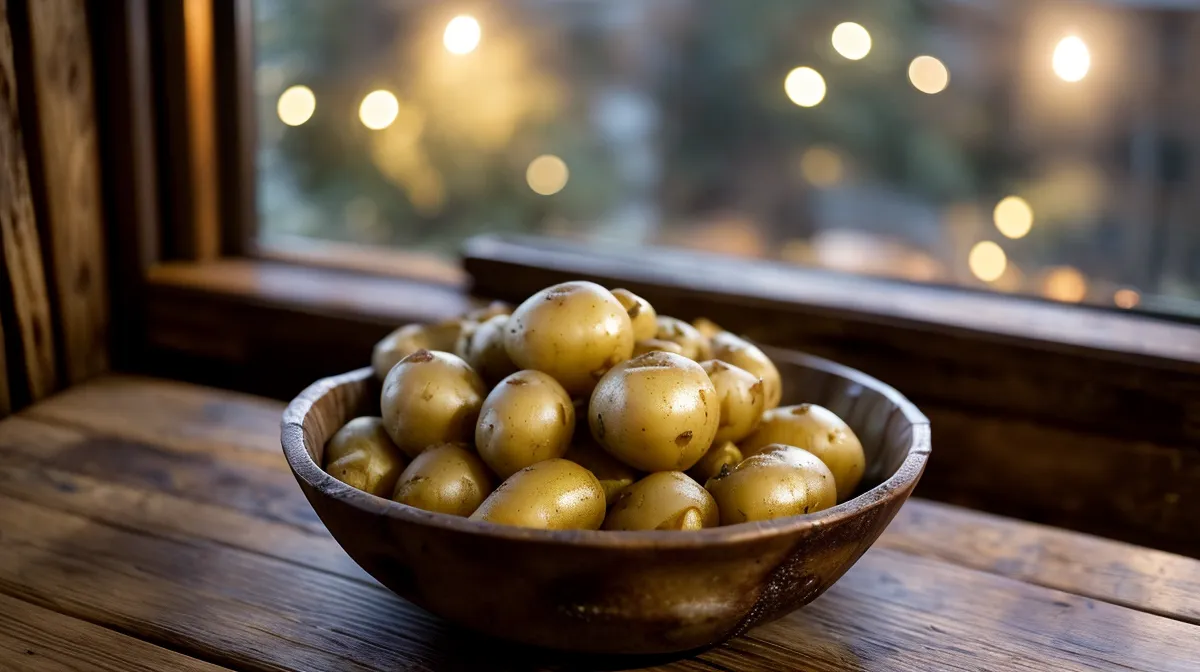
A hot potato and a cold potato are made of identical starch, water, and skin, yet one of them treats a prediabetic body far more gently than the other. That gap is the entire premise behind the cold potato method, one of the more talked-about tricks in low-glycemic cooking right now, and it's also where the internet tends to get the story wrong. People treat resistant starch like a hack that cancels the carb out entirely, some loophole in glycemic index math. It isn't a loophole. It's a real, documented shift in how a food behaves inside your metabolic system once it's been cooked and chilled, but the size of that shift depends on the potato, the person eating it, and a handful of variables nobody puts in a headline.
The Myth Everyone Repeats About Cold Potatoes
Lynda emailed me a while back, after an old post of mine on reading a glycemic index chart, and asked whether cooling a bowl of pasta could cancel out the carbs in it entirely. She's a reader who circles back with the follow-up question I wish I'd answered the first time around, and this one earned its own post.
Her question points at a myth going around every corner of wellness media: chill your starch overnight and watch the numbers drop by some fixed percentage, like there's a formula stamped on every potato. There isn't one. What's true is narrower, and more useful once you understand it properly.
My own introduction to the subject came at a wellness screening at the office — the same kind of screening I help organize every year, which made my own results sting more than they should have. My A1C came back at 5.7%, right at the edge where prediabetes technically starts, according to the American Diabetes Association criteria.
The first thing I tried was cutting anything with an obvious spoonful of sugar in it — the sodas, the desserts, the flavored coffee creamer — while quietly leaving the white bread, the pasta, and the rice exactly where they'd always been on my plate, as if starch only counted when it tasted sweet. My next set of numbers, a few months later, said otherwise.
Potatoes were the specific heartbreak. A plain boiled one sits high on the Glycemic Index chart, practically in soda territory, and for a while I assumed that number was fixed and final — something you either accepted or gave up on entirely.
What Resistant Starch Actually Does When a Potato Cools
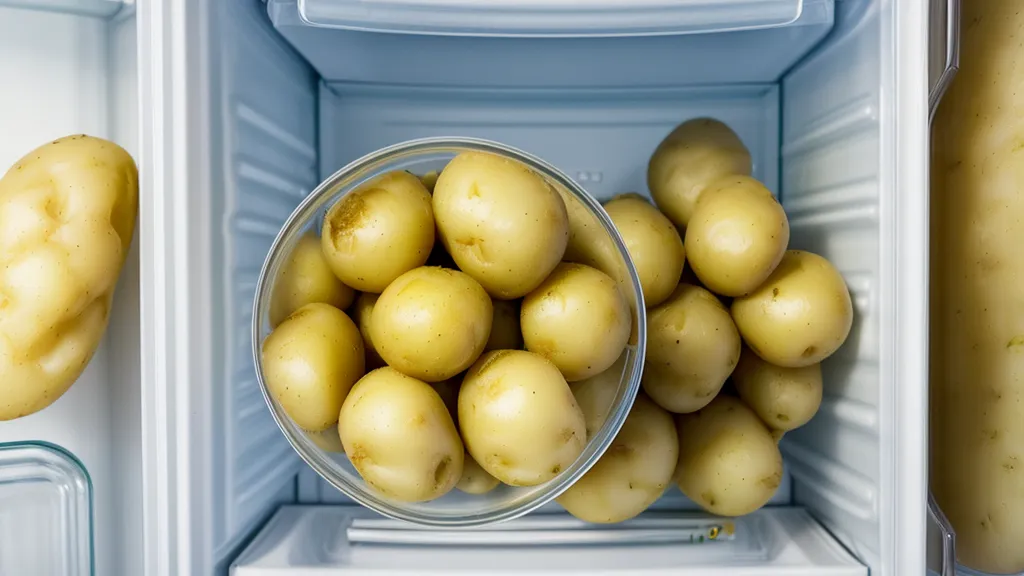
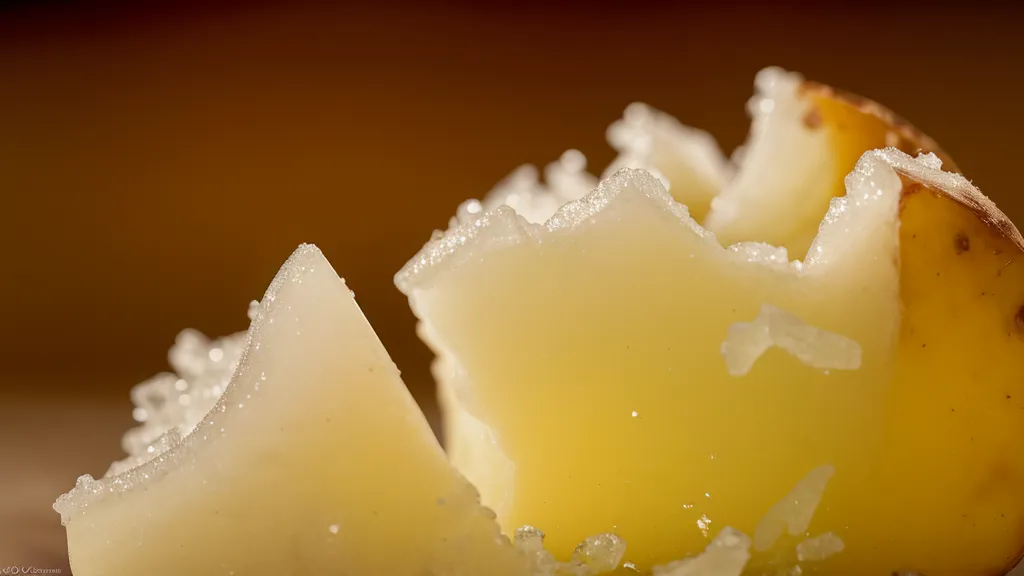
Cooking a potato and then chilling it changes the starch itself, not just the temperature. As it cools, some of that starch reorganizes into a sturdier structure known as resistant starch — specifically the type that forms through cooling, sometimes labeled type 3. Boiling gelatinizes the starch first, turning it soft and digestible; cooling is the second step that partly reverses that, and the result behaves differently once it reaches your gut.
That resistant starch digests more slowly than the softer starch around it, so it doesn't break down as fast in the small intestine. Some of it travels further, into the large intestine, where it behaves more like a fiber than a sugar and feeds the bacteria living there — its own separate conversation about gut health and insulin sensitivity that deserves more space than one potato post. The practical result is a gentler rise in blood sugar after the meal, though how much gentler depends on the potato, the portion, and the person eating it — not a number anyone can promise in advance.
There's No Universal Percentage Here
This is where the myth Lynda asked about falls apart. The specific percentage drop people quote online varies by potato variety, how it was cooked, how long it sat in the fridge, and how that particular body handles starch that day — which means the same potato can behave differently for two different people, or even for the same person a week apart. It's real, it's measurable, and it's still not a formula you can apply blindly.
That's not the same measurement as glycemic load, either, which factors in portion size on top of how fast a food raises blood sugar — a distinction worth knowing but a bigger topic than fits here. What actually confirmed things in my own kitchen was simpler: testing myself directly. I learned how to test your blood sugar after meals with a glucometer, and comparing a hot serving against a chilled one, on separate days, told me more than any headline did.
How to Actually Run the Cold Potato Method
Here's the actual method, stripped of the magic. Cook the potato fully — boiling or steaming both work — then let it cool most of the way down before it goes into the refrigerator. It needs real refrigerator cold, not just room temperature with a lid on, and it needs time: overnight at minimum, sometimes a full day, depending on how patient you are and how firmly your fridge holds its temperature.
My desk neighbor Fatima asked me the question I hadn't actually thought through myself: does it have to be the fridge specifically, or would a cold back porch in a Seattle winter do the same job? Refrigeration is what's actually been tested, so that's what I stick to, even though her logic wasn't wrong to ask.
Vinegar earned a permanent spot in my routine around this time too. A splash of it on a cold potato salad adds acetic acid to the mix, which seems to blunt the glucose response a little further on top of the cooling effect — enough of a difference that I keep the bottle on the counter instead of tucked away in the cabinet.
The first time I actually sat down and ate one this way, I'd made it at the counter that runs under the window over my sink — the one with the corkboard above it, still pinned with printouts and sticky notes, and a shelf of jars I keep for lentils and oats. I remember pouring dried lentils into one of those jars that same week, the soft clatter of them settling against the glass, and thinking patience was becoming the theme of this whole project. That evening, though, it was just a chilled slice of Yukon Gold, a little sea salt, and that splash of vinegar. There's a specific waxy density to a cold potato that a hot one never has, and it took a bite or two to stop missing the steam. Twenty minutes later, the heavy, fogged-over feeling that used to settle in after a starch-heavy lunch hadn't shown up, and that absence was more convincing than the number on any chart.
Reheating Without Losing the Benefit
Here's the part that trips people up, myself included. Resistant starch isn't permanent once it forms — it can be undone. Reheat that cold potato until it's blasting hot, especially in a microwave, and you push some of that reorganized starch back toward its original, faster-digesting form. All that patient chilling gets partly undone by heating it too far, too fast.
Gentle heat is the workaround. A low pan or a short, weak burst in the microwave — just enough to take the chill off without driving it back to steaming — keeps most of the benefit intact. It's a compromise, not a steaming baked potato dripping in butter, but it's a real middle ground instead of an all-or-nothing choice.
Pairing matters too. A little protein alongside the potato slows things down further, and so does moving afterward — I've written elsewhere about how to start walking after meals to lower glucose spikes, since muscle pulls glucose out of the bloodstream in a way that sitting on the couch simply doesn't.
Where This Actually Fits Into a Real Kitchen
Mornings still have their own logic that has nothing to do with what I ate the night before — blood sugar does its own thing before sunrise regardless of dinner, which is a separate rabbit hole I won't get into here. One Wednesday, though, sitting at the counter with coffee, it took me a full minute to place what was missing: the thick, cotton-wrapped heaviness that usually sat behind my eyes by mid-morning simply hadn't shown up, and a cold potato salad from the night before was the only thing I'd changed.
That kind of afternoon crash — the one where you're fighting to stay upright at your desk by three — used to be routine for me, and it's a topic I've dug into more elsewhere. The cold potato trick isn't a cure for it on its own, but it's one piece that adds up alongside the others.
A few other things helped fill the gap while my body recalibrated, including some supplement experimenting I've written about separately — why I added GlucoBerry to my low-GI kitchen lab routine — mostly because fruit and its natural sugars are their own complicated subject that a potato post can't cover properly.
My A1C isn't back to some idealized number, and I'm not going to pretend one kitchen trick fixed a diagnosis. What changed is smaller and more honest than that: I stopped treating potatoes as an enemy and started treating temperature as a tool, one variable among several instead of a single magic switch.
So here's the actual rule, the one I'd have wanted someone to hand me instead of a percentage: cool your starch if you like the effect, treat the size of that effect as personal rather than guaranteed, keep the reheating gentle, and check your own response instead of trusting a headline. That's not as satisfying as a clean number. It's just closer to true.