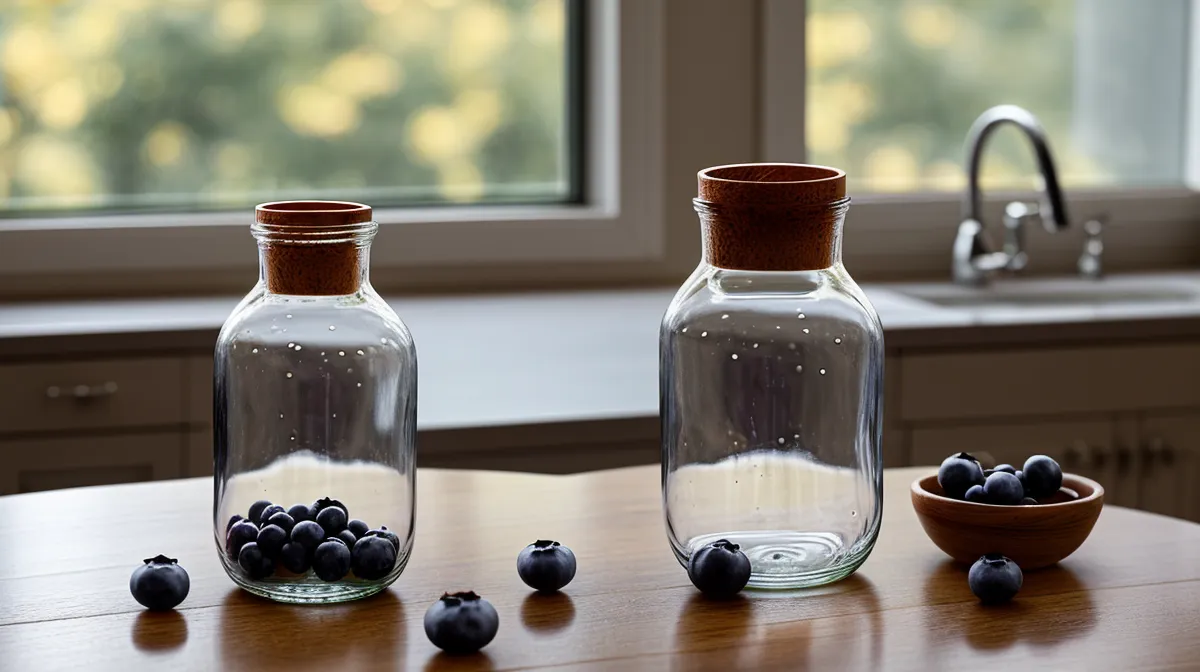
Folding oat batter, I feel the spoon drag, a thick, stubborn pull against the wood right before the mixture finally gives and goes smooth. It's such a small thing to notice, but I notice everything about food now, ever since a prediabetes diagnosis turned my kitchen into something closer to a lab than a place I just cook dinner. This particular batch is steel-cut oats, the bulk-bin kind from PCC Community Markets in Edmonds, and it barely moves my numbers. That's the whole game of low-GI living — figuring out which foods behave and which ones betray you.
Quick disclosure before I get further into this: some of the links below are affiliate links, including for GlucoBerry, which I'll get to. If you buy through them I earn a small commission, at no extra cost to you. I'd rather say that upfront than have you wonder later.
The Myth That You Have to Pick One Lane
Here's the thing prediabetes forums get wrong, constantly: this idea that you either white-knuckle it through food alone, or you're taking the lazy way out with a supplement. Pick a side, apparently. I believed that myth for a while too, and it kept me from trying something that turned out to matter.
By the time I actually got serious, I'd already stopped glancing at just the Glycemic Index and started tracking Glycemic load instead — its own rabbit hole, one I won't repeat here. Before any of that felt normal, though, I tried the home-remedy route first: a cinnamon-and-honey tonic every morning for a month, because someone in a prediabetes Facebook group swore by it.
It tasted like a cough drop dissolved in dish soap. My fasting numbers didn't move a single point. What actually shifted things later wasn't dramatic — I noticed it almost sideways, when two in the afternoon came and went one day and the headache that usually shows up before my last meeting simply hadn't. No lab chart moment, no fanfare. Just an ordinary afternoon that didn't hurt.
By the time any of this started feeling like a system, my actual notebook — I still keep one, an HR habit I can't shake — already had pages of small experiments logged. I'd worked out 5 Ways to Hack Your Morning Coffee for Stable Blood Sugar early on, because coffee is non-negotiable and I wasn't giving it up for anyone.
The cold-potato trick for resistant starch. A vinegar shot before dinner. Cooking pasta the way that keeps the starch intact instead of letting it turn to mush. Riced cauliflower instead of white rice, more times than I can count. Small stuff. It adds up.
A smoothie that sounded perfectly virtuous could still spike me worse than toast — I figured that one out too. Pairing cravings with protein instead of fighting them helped. So did walking after dinner, letting my muscles use the glucose from that meal instead of leaving it stranded. Fruit got picked for more than how sweet it tasted. Intermittent fasting got a try, mostly to see whether it changed how my body responded to insulin. Soluble fiber got added, just to slow things down. And my fasting number crept up some mornings before I'd eaten anything at all — a separate rabbit hole I won't get into here.
None of that shows up as one dramatic before-and-after moment. It shows up as an A1C number that's moved in the right direction, which is a detail I get into properly in another post, not this one.
My friend Noel, a college friend who now lives over in Bellevue, is the most data-driven person I know — she won't believe anything changed unless I show her the actual glucometer log, not just how I say I feel. When I mentioned adding a supplement, her first question wasn't whether it worked. It was compared to what, and tracked for how long.
Sugar Defender, GlucoBerry, and Gluco6, Side by Side
The first one I looked at was Sugar Defender — 24 plant-based ingredients, liquid drops, and a 180-day money-back guarantee that made trying it feel low-risk. It runs $69. I used it for a while. The taste is genuinely earthy, and I never managed to take it straight — it needed tea or coffee to hide in.
But broad wasn't exactly what I was missing. What I didn't have was anything aimed at the sugar my body was still dealing with after a meal was already finished, after the food choices were done. That's the angle GlucoBerry claims to work from, built around maqui berry, a fruit that's naturally low-GI on its own. That's a narrower claim than Sugar Defender's, and narrower is what got my attention. It's also the cheaper of the three, at $59, and it's one capsule, once a day — no drops to measure while I'm trying to get out the door.
Gluco6 was the other name on my shortlist — also $69, in capsule form, aimed more at insulin sensitivity, with a 60-day guarantee. It's a fine option if that's the piece you're missing. Mine wasn't insulin sensitivity. It was the after-the-meal piece, so GlucoBerry made more sense for what I was actually trying to fix.
Honesty about the tradeoff matters here, because the whole pick-a-lane myth is really a question about money and patience wearing a disguise. GlucoBerry took longer to show anything than expected going in, and it's a single-focus formula — it does nothing on its own if the rest of the plate is a mess. Think of it as a recurring line item, the kind you don't budget for because it's fun — you budget for it because skipping it costs you something else. Not a replacement for the list above. Additive, nothing more.
Is Skipping the Supplement the Cheaper, Smarter Move?
Is it cheaper to just eat broccoli and skip all three of these? Obviously, yes. Nobody's claiming a supplement replaces vegetables. But "cheaper" and "sustainable on a Tuesday when work is a mess" are two different questions, and the myth I started with ignores the second one completely.
Sugars smuggled into foods marketed as healthy still catch me more often than I'd like — the same trap covered in A Step-by-Step Guide to Spotting Sneaky Pantry Sugars. The kind of afternoon dip that used to send me straight to a vending machine hasn't disappeared either, the one covered separately in How I Beat the 3 PM Slump Without Sugary Snacks. Neither stopped being true just because a capsule got added to the routine.
My rule now is simple. If something makes the diet-side work easier to sustain, it earns a place in the routine. If it's marketed as a replacement for the food changes, I skip it — no exceptions, no matter how good the guarantee sounds.
Amara comes to mind here. I met her at a nutrition talk at the Kirkland library; now she's approaching all of this from the angle of cooking low-GI for a household with zero interest in eating that way, which is a harder problem than mine. A supplement doesn't solve that for her either. It was never supposed to.
Here's What I'd Tell You First
Real bread is still missed more than I'll admit out loud in a meeting — a good baguette remains a loss I haven't made peace with — which is exactly why How to Bake Low-Glycemic Bread That Doesn't Taste Like Cardboard has become the recent kitchen project. Results are mixed so far. Closer than store-bought "diet bread." Not the same thing.
If you're standing where I was — diagnosed, overwhelmed, unsure whether a supplement is a shortcut or a scam — do the food work first. No pill fixes a plate that never changes, and Noel would say the same thing with a spreadsheet to back her up. But once the food work is actually happening and you're still short something, GlucoBerry is worth a look, especially if budget matters and you don't want another set of drops to measure out. It didn't fix anything by itself. It stopped being a question of cheating versus not cheating, and became one more tool on a long list — which was the point of writing any of this down.