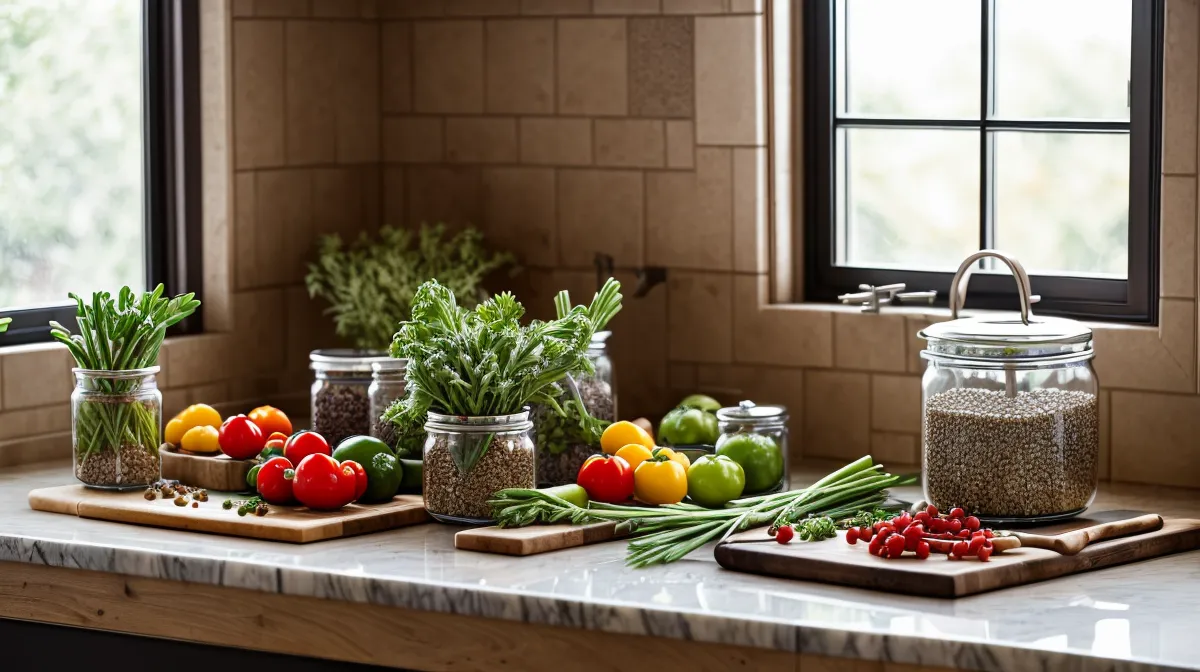
Quinoa carries a glycemic index of 53, officially "low," the same number nutritionists point to when they build a prediabetes diet around whole grains. My glucose meter disagreed. The first pot of quinoa I cooked after my diagnosis, soft and served straight off the stove, spiked me almost as hard as a plate of white rice would have. That gap between the label and the meter is the whole reason my kitchen became a low-glycemic cooking lab for metabolic health, and why so many quinoa recipes floating around online kept failing people like me.
Here's the myth going around every wellness newsletter: if a food's glycemic index is low, how you cook or serve it barely matters. It matters enormously. Quinoa's number assumes a specific preparation, not the mushy, fresh-off-the-burner version most of us actually eat. Treat it like a regular side dish and you're eating a different food than the one on the chart.
The Low-Glycemic Cooking Myth That Fooled Me Completely
That 53 comes with fine print most people skip. A 150-gram serving carries a glycemic load of about 13, which sits in the medium range, and the same cooked cup holds roughly 8 grams of protein and 5 grams of fiber — numbers that should make quinoa a quiet, steady food. On paper, it's armor. Overcook it into a soft mess and eat it hot, though, and that armor stops doing its job. The starch structure that was supposed to slow things down has already collapsed before the first bite.
Think of it the way you'd think of approving a budget line without reading what it actually funds. The category looks fine from a distance. It's only once you look at the specifics, including how the food was cooked, how hot it was, and how fast you ate it, that you see where the number really came from.
Why Did My Quinoa Keep Spiking My Glucose Anyway?
For a while I cooked it the way the box said to: boil until tender, fluff, serve. Every single time, that familiar foggy weight would settle in about an hour later. It wasn't the ingredient. It was the method, and nobody prints that part on the nutrition label.
The quinoa itself came from the same place it always did — the bulk bins at the Trader Joe's on Roosevelt Way NE, same bag, same brand, same price every week. Nothing about the ingredient changed between my bad batches and my good ones. Only the cooking did.
That same blind spot follows me into the office. I got into it in more detail in The Corporate Wellness Irony: Rebuilding My Work Lunch Without the Glucose Spike, because an HR manager preaching wellness while eating the exact food that spikes her is its own special kind of punchline.
Rinse, Toast, Chill: Doing It Right
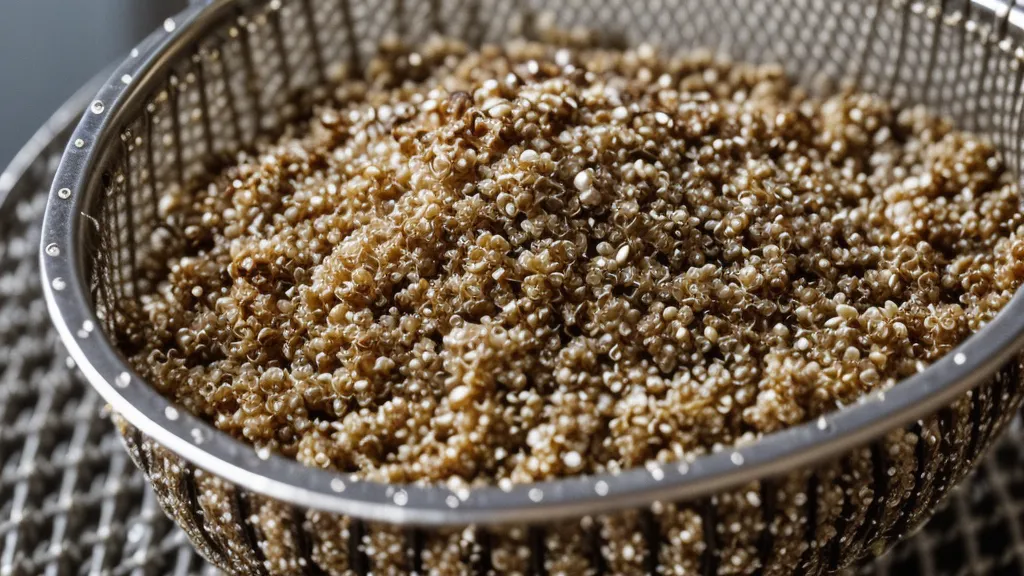
Rinsing comes first, and skipping it is tempting because it feels like an extra step for no reason. Quinoa is coated in saponins, bitter compounds that make it taste soapy and mess with digestion if you don't wash them off. A few minutes under a fine-mesh strainer handles it.
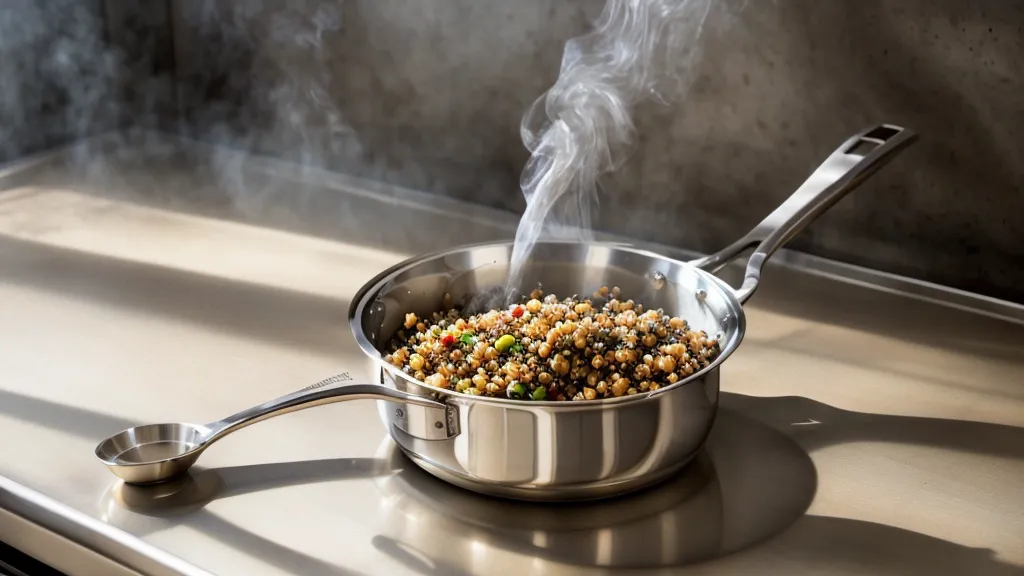
Toasting is the part nobody talks about. After rinsing, the wet quinoa goes straight into a dry, hot pan with no oil and gets stirred constantly until it smells sharp and nutty, almost like popcorn right before it pops. That dry heat tightens the outer shell of each little seed, which slows down how fast your body can break it apart later.
Liquid ratio matters too. I use about 1.5 parts water or broth to 1 part quinoa, a little less than most recipes call for, because a drier pot means less mush. Twelve minutes at a simmer, then five minutes resting off the heat, covered. Fluffy, not wet.
Then comes the step people skip: the whole pot goes into the fridge. Not a portion scooped onto a plate. The whole pot, overnight, before anyone eats a bite of it.
What Resting It Overnight Actually Does
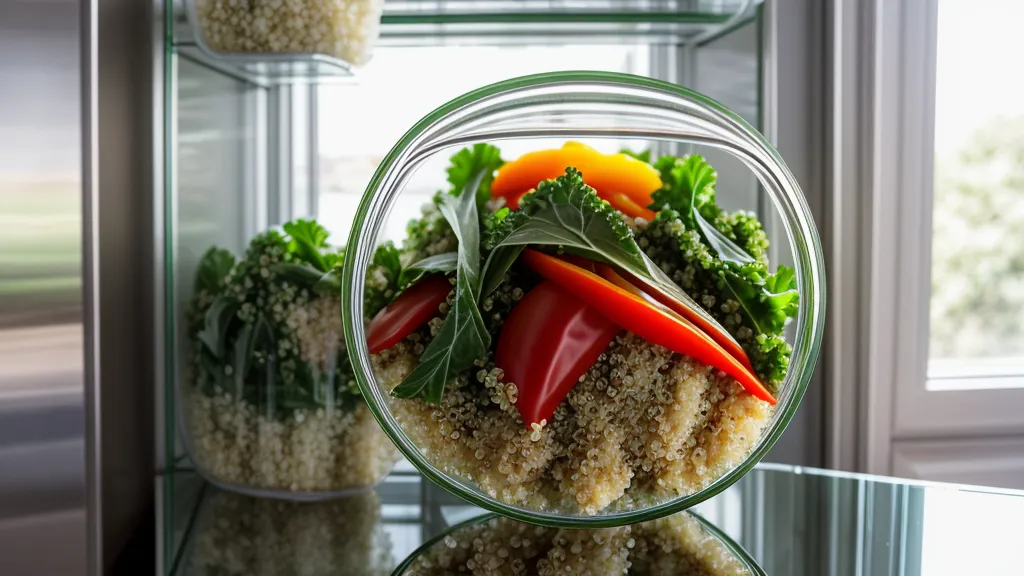
What happens in that cold pot has an actual name — resistant starch — and the deep chemistry of it belongs on a different page than this one. What matters in my kitchen is simple: cold, rested quinoa behaves far more gently than the hot version ever did.
Gently reheated or eaten cold with olive oil, lemon, and a pile of greens, it holds steady where the fresh-cooked version never did. I wrote more about tracking that kind of change in my low-GI lab notes on finding metabolic balance, if you want the messier version of this story.
Keto Wasn't the Answer — Structure Was
Look, before I landed on this, I tried keto, because that's what everyone recommends first. Three weeks in, I was still white-knuckling it, and by day ten I'd already been miserable enough to question the whole plan. Cutting carbs entirely never fixed the actual problem. The problem was never carbs as a category. It was how I was preparing the ones I kept eating.
My neighbor across the cul-de-sac, Greta Mabunda, is skeptical of anything that sounds even slightly diet-adjacent, and she said as much the afternoon the toasting smell drifted across the driveway and she asked what I was depriving myself of now. Nothing, I told her — rinsed, toasted quinoa, left in the fridge overnight. She tried a batch anyway, mostly to prove me wrong, and came back a few days later quieter than usual about how good it actually was.
A reader named Corbin Weathersby emails me every so often with blunt updates on whatever he's testing. When I told him the chilling step mattered more than which grain he picked, his reply was pure Corbin — doubtful until he'd actually tried it, then grudgingly honest that it worked anyway. Talk to your own doctor before changing how you eat, especially with a diagnosis like mine. I'm only describing what worked in my kitchen, not handing out medical advice.
The One Rule I Give Anyone Who Asks
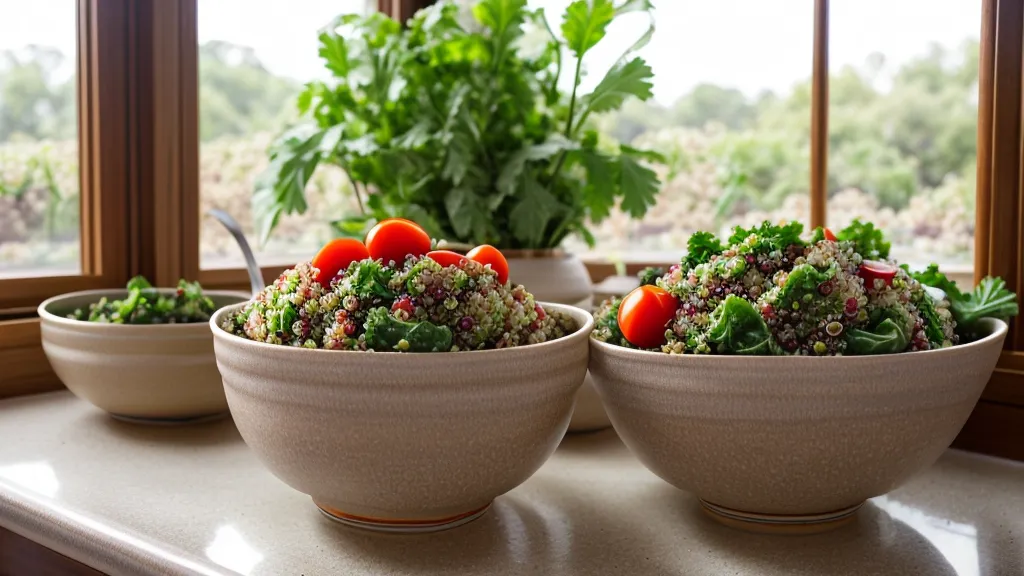
The clearest proof of all this showed up somewhere I wasn't expecting it. Standing in my closet one morning, I zipped last year's jeans straight up, no running leap onto the bed required to get the button closed. That's not a quinoa miracle. That's a steadier system underneath it, and the chilled pot in my fridge is one small, repeatable piece of it.
If you take one thing from this: cook your low-glycemic grains ahead of time, let them go fully cold, and reheat gently or skip reheating altogether. That single habit will do more for your numbers than swapping one trendy grain for another ever will. I still haven't made peace with every part of this diagnosis — I wrote a whole piece about the white bread mourning period because some cravings don't disappear just because you've figured out the science. But quinoa, cooked the right way, is one part of this I've actually got settled.