
I trusted a food just because someone slapped a "low glycemic index" label on it, then felt my energy crater an hour later anyway. That experience is basically the reason there's a stained, Sharpie-scrawled cheat sheet taped to my fridge door, wrinkled at the corners, splashed with balsamic, held up by a magnet from a work conference nobody remembers. It started as a prediabetes survival tool. It turned into a running argument I have with pretty much every article that treats the glycemic index like the whole story.
Mine started at a routine wellness screening at the office, the kind of irony that doesn't need embellishing, since I'm the one who orders the fruit bowl for those events. My A1C landed at 5.7%, right at the prediabetes line, and a follow-up test months later put it even higher after I'd spent that stretch pretending nothing had changed. That's the whole origin story. No PhD, no nutrition degree, just a scared HR manager and a lab report.
The Glycemic Index Myth That Almost Sank My A1C Management
Here's the myth: if a food scores low on the glycemic index, it's automatically fine to eat, no matter how much of it lands on your plate. I believed that for months. Glycemic Index only measures how fast a fixed amount of pure carbohydrate raises your blood sugar compared to glucose, and it says nothing about how much of that food is actually on your plate.
Is a Low-GI Number Always Safe?
No, and that gap is where the second half of the equation comes in. Glycemic Load factors in portion size on top of the GI number, which is really the piece that determines what a food does to your actual bloodstream instead of a lab's fixed serving; it deserves its own deep dive more than a paragraph here. Once I understood that, a lot of my early confusion made sense, including why my supposedly virtuous breakfast smoothie kept wrecking my mid-morning numbers. Blending fruit into liquid form changes how fast it hits you, which is exactly why my 'healthy' smoothie was spiking my glucose even though every ingredient in it would have scored low on its own.
The rule I actually use now: check the GI band first, then eyeball the portion like it's a budget line item — a cup of something yellow-zone is a different animal than three cups of it. Noel Takemoto, a friend from college who lives over in Bellevue these days, is the one who hammered that home for me; he's relentlessly methodical, the type who wants to see the actual glucometer log before he'll believe a food is a problem, and portion size was the thing that finally satisfied him.
Green, Yellow, Red: What My Kitchen Lab Cheat Sheet Actually Measures
Underneath all the Sharpie ink, the cheat sheet is just the standard classification, and this is the part I wish someone had explained to me plainly on day one instead of burying it in a fifteen-tab research binge. The glycemic index runs on a 0-100 scale: anything at 55 or below counts as low, 56 to 69 is medium, and 70 or above is high. That's it. That's the entire technical foundation underneath every green, yellow, and red sticky note on my fridge.
A second myth trips people up right around here: that "natural" and "low glycemic index" are the same thing. Watermelon is the example that broke my brain a little — it feels like the definition of a virtuous summer snack, and it still lands solidly in high-GI territory. Meanwhile a chickpea, which nobody has ever described as refreshing, sits calmly in the low zone. The scale doesn't care about your feelings toward a food, only about the carbohydrate structure inside it.
Sorting My Real Grocery List Into the Three Zones
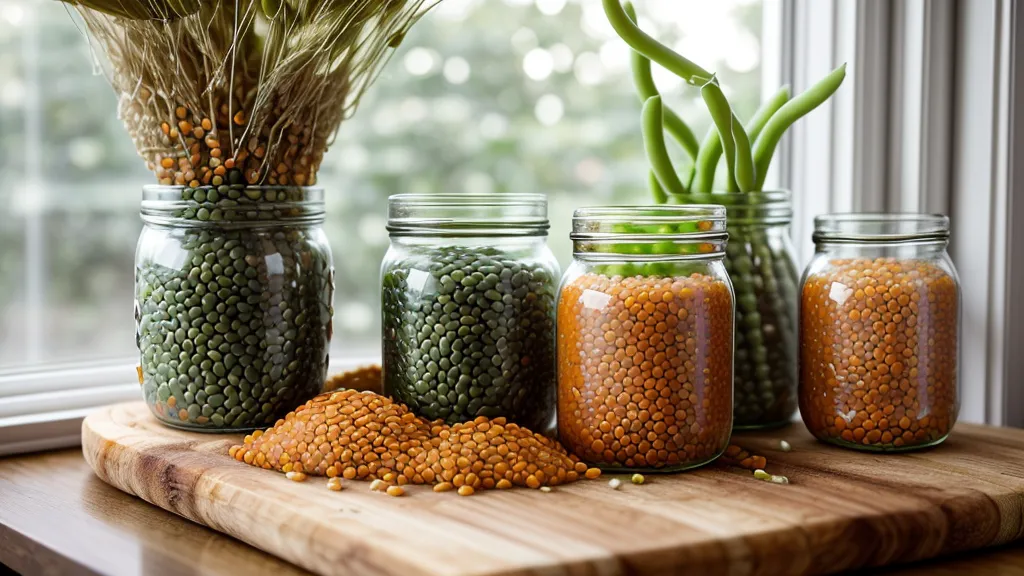
My green zone — the 55-and-under foods I reach for without thinking too hard — is mostly steel-cut oats, and only steel-cut, because the instant packets tanked my energy within the hour the one time I tried them. Blueberries and raspberries live there too, along with chickpeas and lentils I buy in the giant Costco bags, and barley and quinoa, which have a chewy bite that almost makes me forget white rice exists. There's a sound I've come to like without meaning to — dried beans clattering into a glass jar, a small hollow knock as the last few settle at the bottom — which is a strange thing to find satisfying, but here we are.
The yellow zone — 56 to 69 — is where timing does the heavy lifting. These are the foods I'll eat before I know I'm about to be active, because moving muscle pulls glucose out of the bloodstream and takes some of the sting out of a mediocre GI score. Most evenings now, that means a loop through Lincoln Park in West Seattle after dinner, nothing dramatic, just enough that I've made it part of the routine of learning to start walking after meals to lower glucose spikes instead of collapsing onto the couch the second the dishes are done.
Red zone, 70 and up, is the heartbreak list: white bread and bagels, which I loved unreasonably and still miss on a near-daily basis, watermelon for the reasons above, and instant mashed potatoes, which might as well be glucose in a bowl with butter on top. I've tried swapping in cauliflower rice here and there with mixed results — sometimes it works as a stand-in, sometimes it just reminds me what I'm missing — and that swap alone is a whole separate conversation I won't get into here.
Where the Cheat Sheet Still Falls Short
Look — not every experiment in this kitchen has worked. I signed up for one of those meal-kit subscriptions marketed straight at people like me — pointedly low-GI, diabetes-friendly branding on every box — and every single meal tasted like damp cardboard dressed up with a sprig of rosemary. I gave it a real shot before admitting defeat and cancelling. Sometimes doing it yourself, badly, beats outsourcing it to a service that clearly never had to actually eat its own food.
Then there was the cauliflower crust pizza that tasted like wet regret, eaten standing over the sink so I wouldn't have to sit with how bad it was. Progress here has never been a straight line. What actually shifted my trust in all of this was quieter than any single failure: I woke up on an ordinary Wednesday and realized, almost as an afterthought, that the fog which usually sat behind my eyes just wasn't there. No occasion, no milestone attached to it. Just an ordinary morning that felt unusually clear.
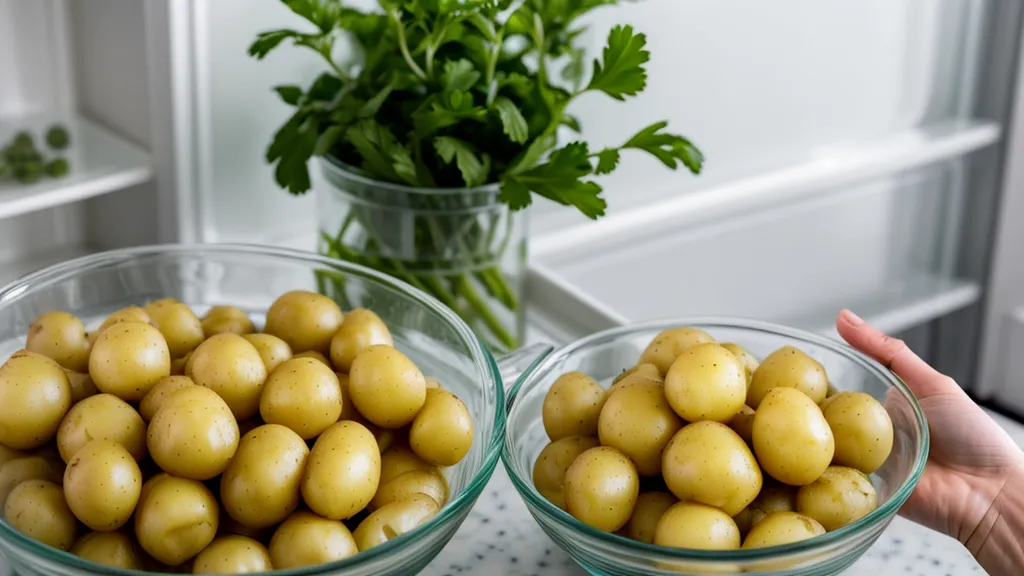
The closest thing to a genuine breakthrough came from a much less emotional place: starch structure. Cooling cooked potatoes before eating them changes how your body handles that starch, and learning how to use the cold potato method for resistant starch turned into a real fixture of my Sunday routine, not just a one-off experiment. It's not dramatic. It's just quietly useful, which after months of dramatic failures felt like enough.
Building a Low-GI Lifestyle Without Losing Your Mind
None of this covers everything, and I want to be upfront about that instead of pretending the fridge sheet is a complete manual. It doesn't get into insulin sensitivity, or why a fasting number some mornings runs higher than the number after dinner the night before — that's its own frustrating rabbit hole people call the dawn phenomenon — or why a spoonful of vinegar before a meal seems to blunt a spike for some people, or why pasta cooked al dente scores differently than pasta boiled soft. Fruit is its own long conversation too; not every piece of it behaves the same way once it's actually in your body, and pairing carbs with protein is a separate lever I've only started experimenting with. Cramming every one of those onto one sticky note would defeat the purpose of a cheat sheet.
An acquaintance of mine, Amara Sekibo, whom I met at a nutrition talk at the Kirkland library, is working through the same cheat-sheet logic from a different angle — she's trying to cook this way for a household that never signed up to eat differently, which is its own kind of hard I don't have to deal with. She's the one who got me thinking about soluble fiber as another lever worth pulling, and about why that afternoon crash some people blame on willpower usually isn't a willpower problem at all. A1C is the average picture, not a daily scoreboard, and remembering that distinction has kept me from panicking over one bad grocery run.
So if you're standing in a kitchen aisle staring at a package that says "low glycemic" and treating that as permission to eat the whole container, that's the myth worth dropping first. Check the number, then check the portion, then decide — in that order, every time. Tape your own version of the sheet to your fridge if it helps. Mine is ugly and stained and it still works better than anything a glossy app ever gave me, and that's really the whole point of a cheat sheet: not perfection, just something true enough to reach for on a Tuesday when you're too tired to think.