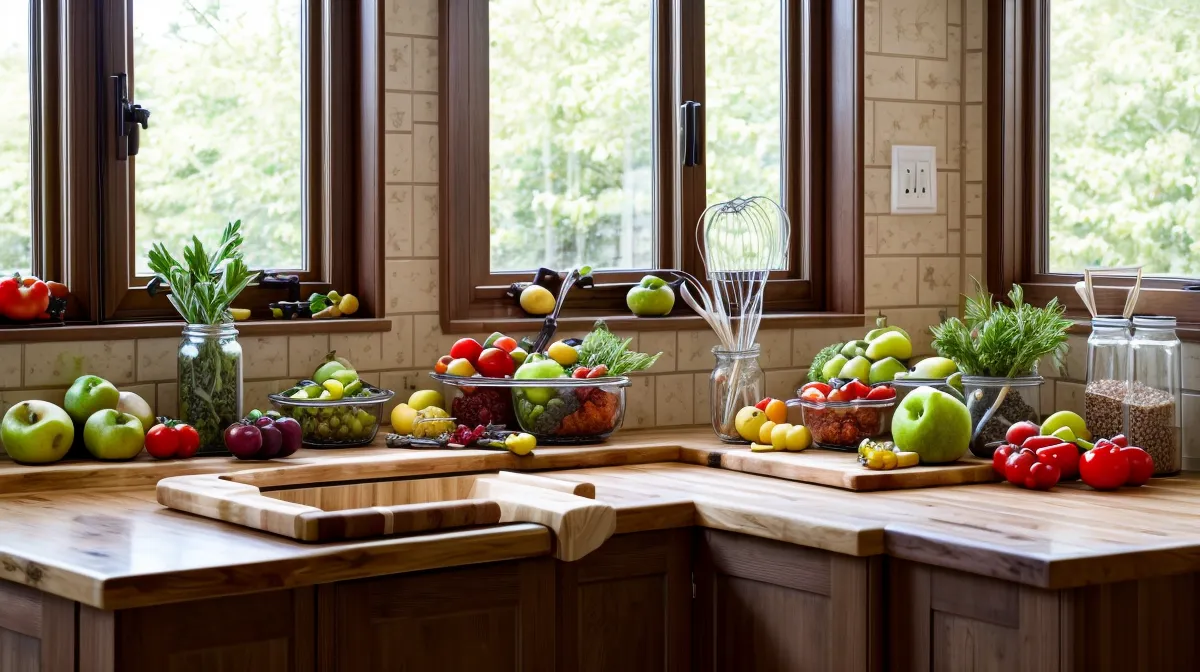
Twist the cap off a glucometer often enough before your morning coffee, and the small squeak becomes as routine as checking whether the low-GI snacks in the cupboard are still worth trusting.
That's the rhythm behind most of what I've learned about low-GI snacks. A prediabetes lifestyle built around blood sugar management doesn't need a forbidden-foods list — it needs a fast way to judge a snack before it's in your mouth. Testing combinations in my own kitchen, somewhere in the middle of an ordinary Seattle wellness routine, taught me a short framework that holds up better than any single ingredient list: pair the carbs with real fat or protein, don't trust fiber by itself, and check the actual result instead of guessing at it.
What Makes a Snack Actually Low-GI, Not Just Low-Sugar
Low-sugar and low-GI get treated like synonyms, and they aren't the same thing at all. The idea behind the Glycemic Index is about speed, not sweetness. How fast a food's carbohydrate shows up in the bloodstream compared with a reference food matters more than how much sugar sits on the nutrition label. A rice cake can look virtuous and still act fast. A square of dark chocolate can look sinful and barely move the needle. That mismatch is why I stopped shopping by sugar grams and started asking a different question instead: how fast, not how much.
Portion size changes that speed more than most people expect, and it helps to think of it less like a fixed nutrition fact and more like a budget. It's not just what a food costs metabolically per bite, it's how many bites end up on the plate. Glycemic Load accounts for how much carbohydrate is actually sitting in the serving in front of you, not just how fast that food category tends to move in general. I laid out the actual math for anyone who wants to run their own numbers in The Kitchen Lab Tutorial: How to Calculate Glycemic Load for Your Favorite Recipes, so I won't repeat the formula here. What matters for snacking is simpler: smaller, paired portions beat large, solo ones almost every time.
Why Fiber Alone Never Held Me Over
Fiber has a good reputation, and mostly it deserves one, but a fiber label by itself is not a satiety guarantee. For a while I loaded up on high-fiber crackers from the grocery store, assuming the number on the box was doing all the work, then wondered why I was hunting for something else within the hour. Soluble fiber slows how fast sugar gets absorbed, which is genuinely useful, but that slowing effect only turns into lasting fullness when there's something else in the snack for your body to work through alongside it. Fiber sets the pace. It doesn't fill the tank on its own.
Here's the thing about that lesson, though: the clearest miss I ever had wasn't a cracker. It was a green juice. I swapped it in for breakfast once, certain I was doing something virtuous, and by mid-morning I was lightheaded, rifling through a desk drawer for anything solid. All carbohydrate with next to no fat or protein to slow any of it down. That's exactly the pattern I now watch for and skip.
Pair Fat and Protein Before You Reach for Fiber
Pairing became the rule that changed the most for me: put fat or protein next to the carbohydrate before worrying about anything else. A little full-fat cheese, a spoon of nut butter, a small handful of nuts. Modest amounts do real work here. Saturated fat has spent decades as the assumed villain in every diet conversation, but a moderate amount alongside carbohydrate slows digestion instead of letting sugar arrive all at once. Protein pairing works on a similar principle, which is worth knowing even if the snack you reach for looks nothing like the ones I lean on.
A friend of mine swears her twice-a-week Pilates reformer classes do more for her blood sugar than any snack ever could, and she's probably not wrong. Movement matters more than any of this. But not everyone's schedule bends that way, and a well-built snack can do real work in the gaps a workout never reaches.
The Low-GI Snacks That Actually Hold Me Until Dinner
None of this needs to be complicated. Three combinations earned a permanent spot in my kitchen, mostly by surviving repeated testing rather than by sounding impressive on paper.
Apples Paired with Almond Butter, Not Eaten Alone
An apple eaten alone used to leave me hungry again within twenty minutes, no matter how crisp or how good it tasted going down. Slicing one up and dusting it with cinnamon, then pairing it with a couple of tablespoons of raw almond butter, changed that completely. The crunch of a roasted almond against something sweet and tart does something a plain apple never managed on its own. It reads as a real, substantial food, not a garnish, and the fat in the almond butter keeps the carbohydrate from hitting all at once.
A Chia Pudding Built Around the Second-Meal Reputation
Chia seeds earned their spot for a different reason. Soaked in unsweetened almond milk with a splash of vanilla, they turn into something closer to pudding than seeds, and chia carries a reputation for improving how your body handles the next meal after this one, not just this snack in isolation. It's not a substitute for bread, and I won't pretend otherwise. A warm baguette in a grocery store still gets a second look I'm not proud of, but the pudding does its job without asking me to pretend I don't miss anything.
A Savory Yogurt Bowl Instead of a Sweet One
Sweetened yogurt was the easiest habit to break once I saw what even a "healthy" honey drizzle did to my glucose. Full-fat Greek yogurt with sliced cucumber, a drizzle of olive oil, and a pinch of sea salt sounds like an odd combination until you try it. The protein in the yogurt and the fat in the oil together produce a kind of fullness that a sweeter version never came close to, and it's become the snack I reach for on the drive home more than any other.
How to Judge a Snack Before You Eat It
The clearest data point I've collected on pairing versus portion came from something as ordinary as a stir-fry. A plate built on cauliflower rice left my glucometer reading 112 an hour later; the same plate built on the real thing usually put me closer to 156. Same protein, same vegetables, same portion. The only real variable was the base. That's not proof of anything universal, just one data point from one kitchen, but it's the kind of test anyone can run on themselves before deciding a swap is worth keeping.
Pike Place Market gave me the best plain-ingredient find I've had in a while: a stall selling raw almonds by the scoop, nothing added, no honey glaze, no sugar coating. That's become my default gut check now, wherever I'm shopping: read the ingredient list first, and if fat or protein isn't already built into the snack, plan to add it yourself before you eat it.
The Trade-Offs Nobody Puts on the Label
None of this makes low-GI snacking effortless, and I'll say the quiet part out loud: I still miss plain white bread more than I'll ever admit to most people, and a soft dinner roll is tempting in a way chia pudding will never be. Ingredient lists have also gotten almost comically long for things that used to be simple, and reading enough of them turns you into someone who roots for the shortest label on the shelf out of sheer exhaustion.
The trade-off is real, though. A snack that pairs fat or protein with a modest carbohydrate portion keeps me steady in a way that fiber claims or sugar-free labels never did by themselves. If you're building your own list, don't try to overhaul everything at once. Pick one snack, check what's actually in it, and test the result on yourself before deciding it's worth keeping. The same logic holds up outside the kitchen too; I wrote about applying it during a stretch of bad traffic in The Commuter's Tutorial: Staying Low-GI on the I-5, for anyone whose worst cravings hit behind a steering wheel instead of at a desk.