The crunch you keep failing to get from a bag of roasted chickpeas has nothing to do with the chickpea, and everything to do with the first ingredient every recipe tells you to add.
The fix turns out to be almost insulting in how simple it is: skip the oil until the beans are already crisp, then add it — along with the spices — in the last sixty seconds, off the heat entirely. Most oil-first methods turn a naturally low-glycemic food into a soggy, scorched letdown, and if you're rebuilding a kitchen around glycemic load after a prediabetes diagnosis, a sad chickpea feels like a personal insult on top of everything else.
Context first, because the method only matters if the stakes feel real: cutting the obvious sugar while still eating white bread, pasta, and rice like they were their own food group did nothing for my fasting number — my next screening came back worse, not better. A few weeks later I grabbed a pair of jeans from the back of the closet, pulled them on standing up, and didn't need the usual lie-down-and-wriggle to get the zipper closed. That's the whole backstory. Everything past this point is kitchen mechanics.
Why the Snack Aisle Keeps Failing You
Standing in a grocery aisle reading nutrition panels after a metabolic wake-up call is its own specific grief. Pretzels, pita chips, flavored crackers — most of them are just starch in salted costume. The low-glycemic-sounding alternatives aren't much better: the keto snacks stacked near them usually run on chicory fiber and gum blends that sit heavy for an hour afterward. Meanwhile, I'm still mourning white bread, and no amount of substitute crunch fully fixes that.
This is where the Trader Joe's on Roosevelt Way NE earns its loyalty — partly habit, partly a reader named Lynda Ostrowski, who's emailed me regularly since a glycemic-index piece I wrote a while back, sending me enough side-by-side grocery receipts comparing that location against her usual Safeway that I trust her instincts about where to shop more than my own. Canned chickpeas there are cheap, plain, and exactly what this method needs — nothing fancier required.
Skip the Oil First When Roasting Chickpeas
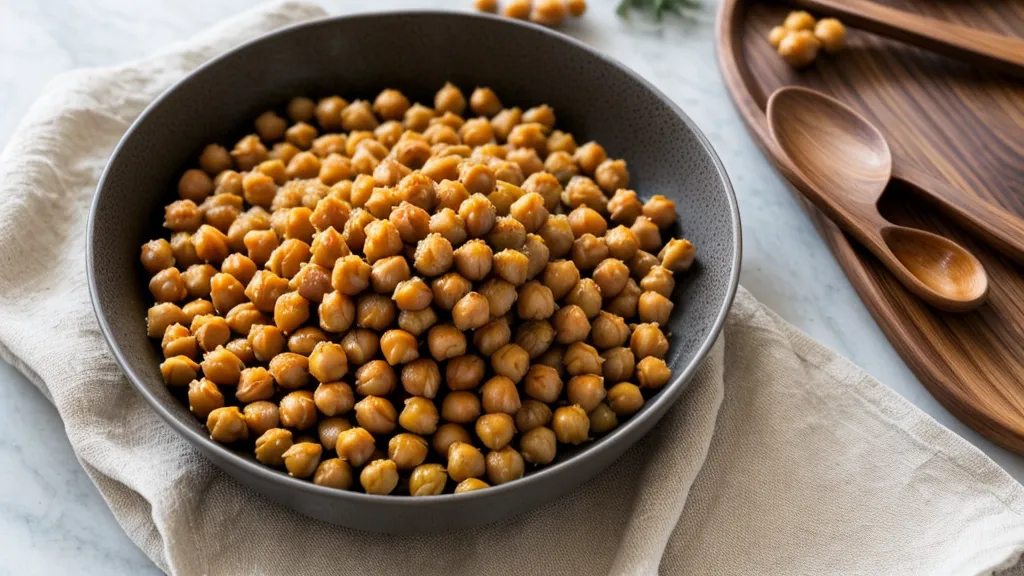
Nearly every recipe you'll find online says to toss the canned chickpeas in oil, dump on the spices, and roast for half an hour. It's also, almost without exception, the reason the batch comes out chewy in the middle and bitter on top instead of crisp all the way through. Coating a damp chickpea in oil before it hits a hot oven does something counterintuitive — it seals in moisture that needs to escape, frying the outside while steaming the inside into paste. Ground spices suffer worse. Paprika, garlic powder, onion powder — they carry enough natural sugar and fine particulate that forty minutes of dry heat turns them to carbon.
Found that out the hard way, more than once. One batch went soggy from too much oil and not enough time in the oven; the next, overcorrected and left in too long, came out as a tray of bitter, blackened beans that smelled like burnt dust and went straight into the compost bin. Neither one resembled a potato chip in any way that mattered.
How Low-Glycemic Are Chickpeas, Really
Here's the part that makes the trial and error worth it: standard cooked chickpeas score around 28 to 32 on the glycemic index, well under the 55 cutoff that separates a low-glycemic food from everything else. Their carbohydrate sits locked inside thick plant cell walls, so digestion runs closer to a trickle than a flood — though the glycemic index number alone only tells part of the story, since a food's actual glycemic load also depends on how much of it lands on your plate. None of that changes whether the chickpea gets roasted or simmered into a salad. Drying and reheating the bean during roasting also nudges some of its starch toward a more resistant structure, a process called starch retrogradation — worth knowing the name of, even if the deeper mechanics are a rabbit hole better suited to a different post. What stays constant either way is the fiber bound into the bean itself, which is most of why a cup of chickpeas never reads on a glucose monitor the way a cup of crackers does.
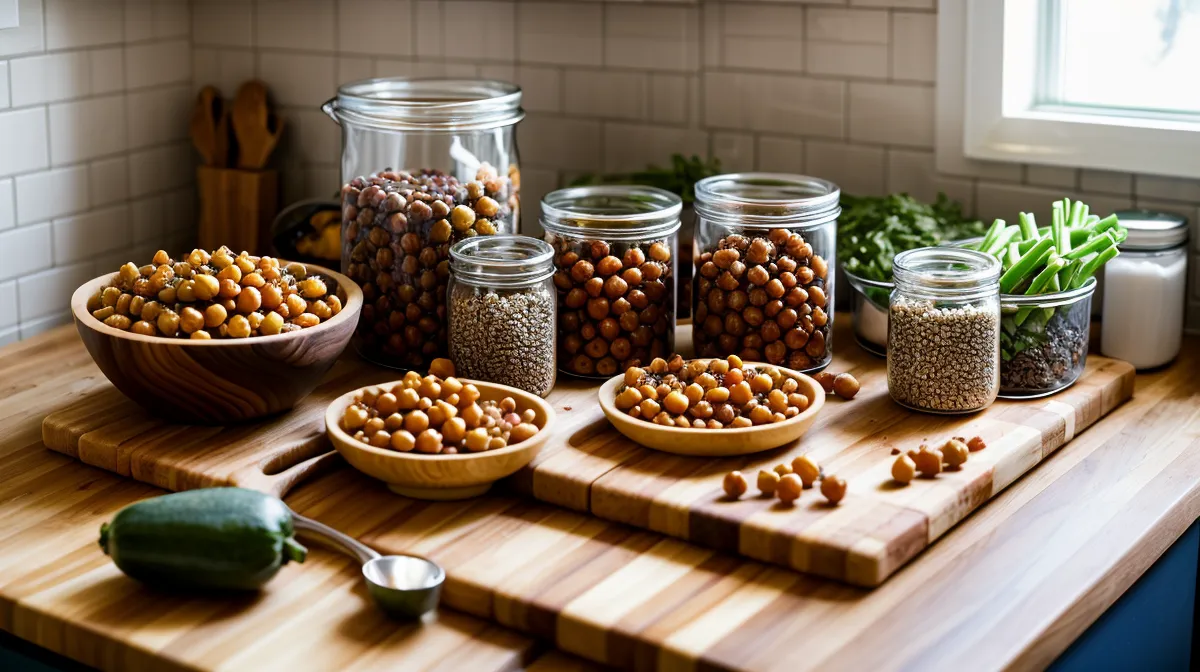
My actual test kitchen is nothing fancier than the peninsula counter in our place up in the Bothell–Kenmore corridor — four stools lined up along it, a corkboard overhead that's gone from cork to solid sticky note from all the printed glycemic charts pinned to it over time, a window over the sink that looks out at a birch tree instead of anything useful. The open shelf past the stove holds jars of dried lentils and steel-cut oats, which is a nicer way of saying I buy pantry staples in bulk because testing recipes burns through them fast.
The Dry-Roast Method, Step by Step
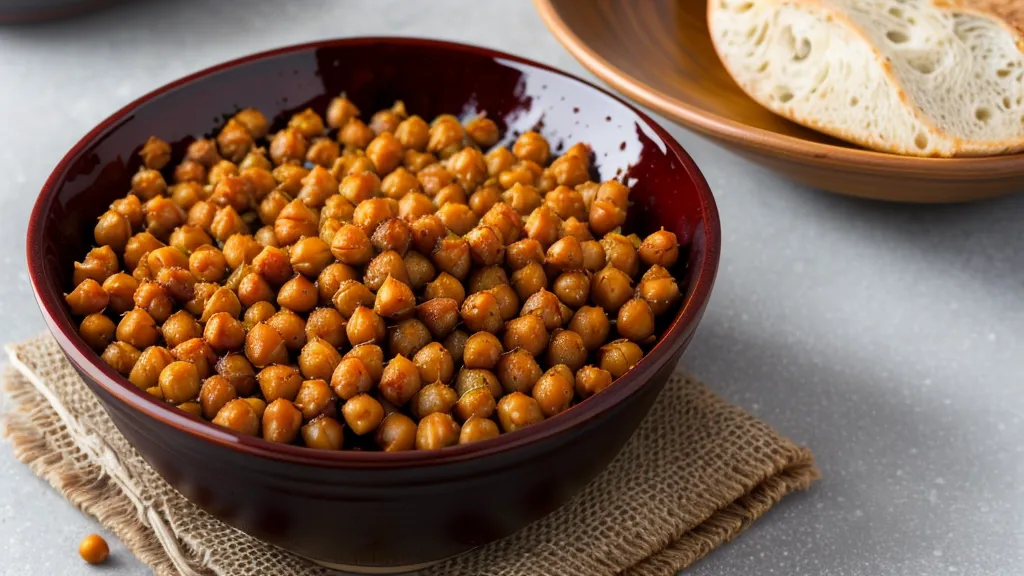
Four steps, in this order, and the order is not negotiable.
- Rinse and dry thoroughly. Drain one standard 15-ounce (425-gram) can of chickpeas and roll them between two clean kitchen towels to knock off surface moisture, then let them sit on the counter for ten minutes so the skins dry out further. Skip peeling them — it's a tedious step that changes nothing about the final crunch.
- Bake them naked. Spread the bare, unoiled beans across a dry, ungreased rimmed baking sheet and roast at 400°F (204°C) for 35 to 40 minutes, shaking the pan hard about halfway through. They're ready when they sound like dry marbles rolling across a chalkboard rather than a dull rattle.
- Toss with oil while they're still hot. The moment the tray comes out of the oven, tip the beans into a wide heatproof bowl, drizzle with exactly one teaspoon of olive or avocado oil, and stir fast. The residual heat spreads that small amount of oil over every surface without turning anything soggy.
- Bloom the spices immediately. Dump the spice blend over the hot, glistening beans right away. The fat-soluble compounds in the spices bloom in the warm oil instead of scorching, which is the entire reason this sequence works when the all-at-once method doesn't.
Three Spice Blends Worth Keeping on Hand
A smoky barbecue version comes together with one teaspoon of smoked Spanish paprika, half a teaspoon each of onion powder and garlic powder, a quarter teaspoon each of dry mustard and cracked black pepper, half a teaspoon of coarse kosher salt, and a pinch of chipotle if you want heat behind it — this is the one standing in for the barbecue chips I still think about most Friday evenings. A za'atar and lemon version leans herbal instead: a full tablespoon of wild za'atar, half a teaspoon of garlic powder, a quarter teaspoon of cracked pepper, half a teaspoon of fine sea salt, and the zest of half a lemon grated straight over the warm beans at the end — fancy enough to serve if someone drops by for sparkling water on the patio. For something sharper, a dill and vinegar blend covers the craving for anything that makes the sides of your tongue tingle: one teaspoon of dried dill weed, half a teaspoon each of onion and garlic powder, a quarter teaspoon of citric acid powder for puckering sourness without adding liquid, and half a teaspoon of flaky sea salt.
Keeping This Crunchy Snack in Rotation Without Making It a Whole Project
Half-pint mason jars of the finished chickpeas live in the bottom drawer of my desk at work now, restocked most weekends. When the afternoon slump hits and the smell of a birthday cake or a box of conference-room donuts drifts down the HR hallway, having something that shatters the same way a chip does, without the slump that follows, keeps me out of the break room. My desk neighbor, Fatima Idrissi, is the one who shows up to every office potluck with a pot of homemade harira, and she's also the first to raise an eyebrow at the row of jars lined up next to my keyboard. Fair enough — it's a strange thing to see at a cubicle.
None of this replaced the bigger shifts, either — the way I rebuilt my morning routine after that initial screening shock turned out to matter more than any single snack ever could. But the chickpeas are the piece that made the rest of it feel survivable, because giving up refined carbs is hard, and giving up crunch entirely is close to unbearable.
Worth saying plainly: I'm not a doctor, not a registered dietitian, and I don't hold formal nutrition credentials of any kind. I'm an HR professional who took her own screening numbers seriously and turned her kitchen into an experiment. Everyone's glucose response is different, so check with your own doctor before making major changes, especially if you're already on medication for blood sugar.
Give the dry-roast version a try this weekend. Hold the oil until the very end, add the spices while everything's still hot, and see if the crunch you've been missing was ever really about the chickpea at all.