
What do you actually say when the waiter is standing there, pen ready, and you're the one person at the table doing quiet math on a bread basket? I get some version of that question more than almost anything else about low-GI dining, right after the one people ask when they find out I used to run corporate wellness programs and then got flagged prediabetic on my own screening. That corporate wellness irony followed me around for the better part of a year before I stopped flinching at it. This is the part of building a prediabetes lifestyle nobody warns you about — not the grocery list, not the meal prep, but the exposed, everyone's-watching moment of ordering out loud while quietly managing your own blood sugar.
Quick note before we keep going — this post has a couple of affiliate links tucked in, mostly pointing at the one supplement that actually made it into my kitchen. Click through and buy something, I get a small commission, you pay nothing extra. None of this is medical advice. I'm an HR manager who had her own numbers come back wrong, not a doctor, so please run anything you try past your own.
What Do You Order When Someone Else Picks the Restaurant?
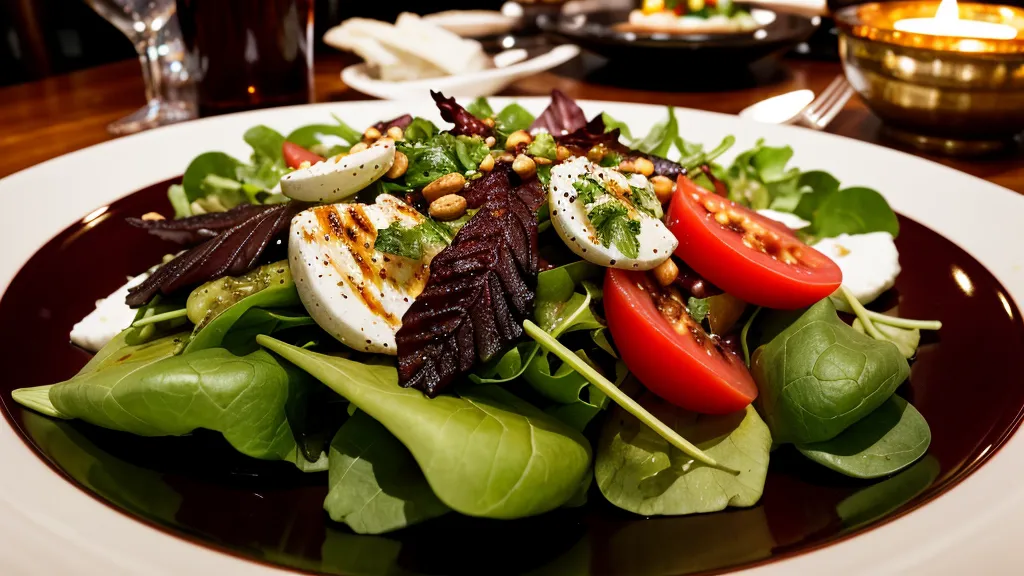
Look, I stopped scanning menus for a 'healthy' section a long time ago, because half the time that section is a grilled chicken salad buried under candied pecans and a vinaigrette that's basically dessert in disguise. Grilled or roasted, not breaded — that's rule one. Ask what's in the sauce before you ask if it's spicy. And if the table is deep in a conversation about quarterly numbers, you don't need to announce that you're skipping the roll basket. Just don't take one.
Nobody at that table needs a speech about your A1C. Quiet works better than a scene, and it looks a lot more composed than picking breading off a piece of fish in front of a client.
Is the Bread Basket Actually the Enemy?
Not exactly, and that surprises people. Bread sits high on the glycemic index — a scale that runs from zero to a hundred, and I try to stay under fifty-five whenever I can plan for it — but a slice eaten alongside protein and vegetables behaves differently in your body than the same slice eaten alone on an empty stomach. It's portion and pairing that decide the outcome, not the bread by itself being some kind of poison.
My friend Noel, who I've known since college and lives over in Bellevue now, is the one who set me straight on this. I was still thinking purely in Glycemic Index terms, he told me, and that number alone doesn't account for how much of a food you're actually eating. Glycemic Load does. A small serving of berries and a whole bagel can sit at wildly different places on that scale even if their GI numbers look similar on paper — I won't turn this into a math lecture, that's really its own topic, but it rewired how I read a menu.
The Corporate Wellness Irony Doesn't Go Away, But the Panic Does
Here is the thing about approving step-count challenges for a living and then failing your own blood screening: it does not stop being funny, in a bleak way, no matter how long ago it happened. I spent a good stretch in denial after my results came back, eating exactly the way I always had, telling myself it was a fluke. It wasn't. My metabolism was quietly working against me, and pretending otherwise wasn't going to change that.
So I built myself a cheat sheet, nowhere near as official as anything my old wellness vendors used to hand out — I leaned hard on a Glycemic Index of Common Foods: Reference Chart until the numbers for the foods I actually eat stopped needing a lookup at all. Mornings still throw curveballs. Plenty of people see their blood sugar run higher before breakfast than it does after lunch, a dawn phenomenon thing that has nothing to do with what you ate the night before, and that's a conversation for its own post. Fasting through a breakfast meeting to dodge it isn't really the fix either; the insulin sensitivity angle on that is real, but it's a deeper rabbit hole than a restaurant strategy post has room for.
Ordering Around the Protein First
Once I understood pairing, ordering got simpler instead of harder. I build the plate around the protein first — salmon, chicken, scallops, whatever's grilled or roasted — and only after that do I decide what carbohydrate, if any, is worth the room it takes up. That order matters. Decide the protein, then negotiate for the carb, not the other way around.
This is also where the one supplement I actually stuck with earns its place. Most mornings I stir a few drops of Sugar Defender into my coffee before I even leave the house — twenty-four plant-based ingredients, no synthetic fillers, and a scent that's earthy, almost like a damp forest floor, which took some getting used to. There's a 180-day money-back guarantee behind it too, which appeals to the part of my brain that likes a solid policy. It's not a substitute for the plate strategy above. It's more like a seatbelt for the days when the lunch meeting turns into a working lunch nobody warned me about.

Foods That Look Healthy Aren't Always Safe
A smoothie that looks virtuous can spike you harder than the dessert on the same menu. Your body handles the fructose in blended fruit very differently than the fructose in fruit eaten whole, which is exactly why I order fruit as fruit, not as a drink, when it's on offer. Sauces are the other trap. Sugar gets folded into a glaze or a dressing under ingredient names that don't sound sweet at all, and no amount of reading the entrée description tells you that.
My friend Amara, who I met at a nutrition talk at the Kirkland library years ago, sends me recipes adapted from West African staples she grew up eating — a jollof rebuilt around cauliflower rice, that kind of swap — and half the time they teach me more about what actually works on a restaurant plate than any handout ever did. A chilled potato salad at a buffet, by the way, isn't the trap it looks like either; there's a whole resistant starch explanation for why cooling a starch changes how your body handles it, and that's worth reading elsewhere if you're curious. Pasta's the same story from a different angle: how it's milled and cooked changes the starch itself before it ever reaches your plate, which is why one bowl of penne can sit so differently than another.
Fiber First, Every Single Time
Somewhere along the way I landed on what I still call my fiber-first rule: nothing hits my stomach until I've had a real serving of something green. A side salad or sautéed spinach, ordered before the appetizers even land. Reading more into How to Add Fiber to Meals for Better Blood Sugar Stability Daily is what convinced me the soluble kind specifically was doing most of the heavy lifting, and I've stuck with the habit since.
I learned the hard way that 'healthy-sounding' isn't the same as safe. I once ordered a balsamic-glazed salmon salad thinking I'd made the smart choice, and the dressing turned out to be nearly all sugar. An hour later, in the middle of a budget meeting, I hit a wall so hard I could barely finish a sentence — what a doctor would call reactive hypoglycemia, though I just called it humiliating at the time. Now I ask for oil and vinegar on the side, always. There's a whole explanation for how the acetic acid in a vinegar-based dressing takes the edge off what follows a meal, and honestly I don't need the mechanism spelled out to know it works — I just know which afternoons go smoothly and which ones don't.
Big Meals You Can't Control Get Their Own Plan
Weddings, banquets, the mandatory multi-course dinner where the menu was set months ago and nobody's taking requests — those need a different plan than a normal Tuesday lunch. I've looked into using GlucoBerry for better glucose management for exactly those nights, since the mechanism is different from what I take daily and some people find the two work well as a pair. I still lean on my own drops most days, but I keep an open mind about what fits somebody else's system better than mine.
Not everything I've tried earned a permanent spot, for what it's worth. I signed up for a meal-kit subscription marketed straight at people with prediabetes, and every single box tasted like damp cardboard dressed up with too much dill. I canceled before it could renew itself on me again. A blunt lesson in reading the marketing copy more skeptically, and a reminder that 'made for your condition' doesn't automatically mean 'made well.'
Does Any of This Actually Show Up in the Numbers?
Yes, though not in the way I expected. The clearest proof isn't a chart or an A1C average — it's reaching two in the afternoon on a stacked meeting day and realizing the headache that used to camp out behind my eyes by then just isn't there anymore. No food coma. No fighting to keep my eyes open on the drive home. Just a steadier kind of tired that actually responds to sleep.
Some of it happens outside the restaurant entirely. I test dressings and swaps at home before I trust them on a menu — there's something almost meditative about watching the steam come up thin and earthy off a pot of steel-cut oats right around the three-minute mark, knowing exactly what's about to happen to my blood sugar because I made it myself. The salad bar at PCC Community Markets in Edmonds has become my other testing ground, actually, for the same reason: it's controlled enough that I can isolate one variable at a time, the way I can't when a client is choosing the restaurant. A short walk after a big lunch helps too, since your muscles pull glucose out of your bloodstream while you're moving, though that one's harder to pull off between courses at a business dinner than it is on an ordinary Tuesday.
None of this makes me fearless around a menu. I still eye the bread basket like it personally wronged me, and I will always miss sourdough more than I'll admit to most people. But I don't dread the ordering moment anymore, and that alone was worth the whole clumsy process of figuring it out. If you want a daily tool that travels well and fits into an unpredictable schedule, Sugar Defender is the one that's stayed in my routine the longest, and it's the one I'd point a fellow prediabetic toward first.