
Twenty-five grams. That's the daily fiber target guidelines set for women, and it turned out to be the number that quietly rebuilt my entire relationship with food after a routine screening turned up prediabetic blood work. I'd spent years grabbing granola bars and calling it breakfast without once thinking about fiber; I just hadn't connected it to anything that mattered.
Denial lasted about a month after that. I kept eating the same "healthy" sandwiches and the same processed bars, sure that willpower alone would fix a number on a lab report, until the follow-up test came back worse and blood sugar stability stopped being an abstract goal and became something I could actually feel change, day to day.
Fiber Hacks That Actually Move the Needle for Blood Sugar Stability
Fiber turned out to be the lever that mattered more than almost anything else on my plate. Cutting calories didn't touch my glucose the way I expected it to; cutting fiber by accident, in favor of "convenient" low-calorie snacks, was what actually tanked it. Once I started paying attention to glycemic load — the Glycemic Index number adjusted for how much you're actually eating, kind of like the difference between one line item and your whole monthly budget — instead of just the raw GI, portions started making a lot more sense.
Grocery shopping became a research project overnight. I stood in an aisle at Costco for the better part of an hour once, squinting at a loaf of "multigrain" bread that looked hearty enough to be virtuous. It wasn't. It was white bread colored with molasses, with barely a gram more fiber than the loaf sitting right next to it. That kind of labeling still makes me want to file a complaint with someone. It also taught me to scan for sugar hiding under names that don't sound like sugar at all (cane juice, dextrose, rice syrup), which is its own maddening little skill.
Soluble Fiber, Explained the Way I Wish Someone Had Told Me
Soluble fiber is the part of this that actually changed my numbers, so let me explain it the way I finally understood it. It dissolves in water and turns into a thick gel as it moves through your gut, and that gel physically slows down how fast the sugar from your meal gets into your bloodstream (a speed bump instead of a straight shot). Insoluble fiber, the kind in wheat bran and vegetable skins, doesn't gel the same way. It just adds bulk and keeps things moving, which matters for digestion but isn't doing the same glucose-buffering work.

Starch behaves differently depending on how you cook it, too. Pasta cooked a certain way and then cooled changes texture in ways that genuinely surprised me the first time I read about it, and even rice turns some of its starch into a type your body can't fully break down once it's been cooked and chilled. Swapping white rice for cauliflower rice on stir-fry night was one of the smaller changes that made a bigger difference than I expected, calorie math aside.
My Green Juice Breakfast Left Me Starving by Mid-Morning
Green juice was my first real experiment, and it was a disaster. I replaced breakfast with it for a couple of weeks, feeling very proud of myself, and then spent every single morning white-knuckling my way to 10 a.m., wondering why I was starving an hour after "eating." There was no fiber in it, no fat, nothing to slow anything down. It was just fast sugar hitting my system and leaving just as fast.
What worked instead was pairing protein with anything carb-heavy — a handful of almonds with fruit instead of fruit alone — because that combination blunts a spike far better than either food manages on its own. That afternoon crash I used to get like clockwork has an actual name, something close to your blood sugar overcorrecting after it spikes too fast and then dropping you into a wall of fatigue. A smoothie that sounds perfectly virtuous can still do this if it's mostly fruit and light on anything with substance to slow it down.
Layering a Low-GI Diet Without Losing Your Mind
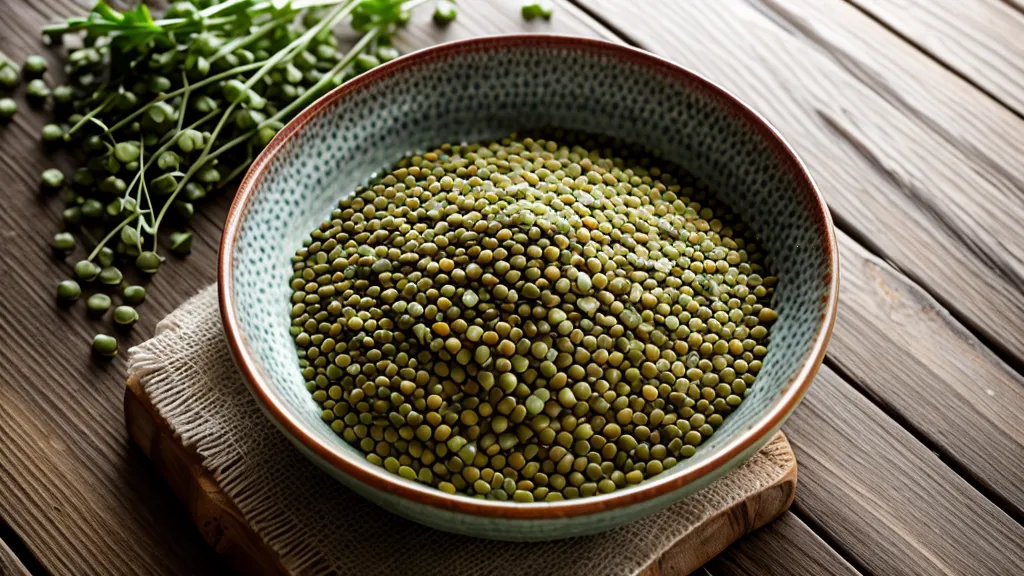
By the numbers, it's easier to hit a fiber goal than it looks. One tablespoon of chia seeds is about 5 grams. Half a medium avocado adds something like 13.5 grams. A cup of cooked lentils brings 15.6 grams almost by itself, and lentils are filling enough that I started swapping them in for half the meat in whatever I was cooking — I even wrote up how to prepare dried beans for a lower glycemic response, since that was its own small breakthrough for my Sunday routine.
Fruit still has a place on my plate, just not an unlimited one. How your body handles the sugar in fruit varies enough by type that I stopped treating "fruit" as one single category. Some evenings I walk the waterfront trail on Mercer Island after dinner, less for exercise than to physically feel my body use up whatever I just ate. A short walk pulls glucose out of your bloodstream in a way that sitting on the couch never does. Whether that's mostly about muscle or metabolism or something else entirely, it's the single most reliable trick I've found for an even evening.
Building a little more muscle and not skipping meals both seem to help my body respond to insulin better than it used to, though that's a longer conversation than I have room for here.
One Lesson for Anyone Starting This Prediabetes Lifestyle
Around week four of actually paying attention, I walked straight past the candy dish on the reception desk at work and didn't register it was even there — no internal negotiation, no talking myself out of it, just genuinely nothing, until a coworker mentioned later that the bowl was nearly empty and asked who'd been raiding it. It wasn't me, for once, and that felt like more of a milestone than any number on a chart.
A friend of mine swears by Pilates reformer classes twice a week and says it fixed everything for her. I believe her, but fiber was the piece that actually moved my numbers, and I've stopped assuming one person's fix will be another person's fix. My A1C is a three-month average, not a daily report card, and my mornings still run a little high sometimes for reasons that have nothing to do with what I ate the night before; that part isn't fully in my control, and I've made peace with it.
Here's the one thing I'd tell anyone starting this same prediabetes lifestyle: stop asking what you can't eat and start asking how much fiber you can add to what's already on your plate. That single reframe did more for me than any list of forbidden foods ever could. I still miss white bread — the real stuff, crackly crust and all — more than I'll ever admit to my wellness-program colleagues, but I don't get that afternoon crash anymore, and for me, that trade keeps winning. If you want the fuller picture of why I trust my own kitchen over generic advice, I laid it out in why my kitchen lab beat the official nutrition guide, and the Glycemic Index of common foods is the chart I still reference more often than I'd like to admit.