
A spoon dragged slowly through a pot of bean-thickened white chili makes a completely different sound than one dragged through a flour-based roux, thicker and slower, almost sticky in the best way. That one textural difference is the entire reason people keep asking me the same handful of questions about soup recipes once flour gets taken off the table for a prediabetes diet.
Here is the thing about low-GI cooking that soup makes obvious fast: a bowl of broth with vegetables floating in it is rarely the problem for blood sugar management. The problem is almost always whatever got stirred in to make it thick. Readers send me versions of the same five questions, and a colleague down the hall in HR has asked me most of them too, so I'm answering the real ones directly instead of dancing around them with a vague pep talk. I'm sitting right at the counter where I do most of this testing, with a tangle of printed GI charts tacked up close enough to check without putting down the spoon, and a rotating lineup of jars holding whatever bean or grain I happen to be testing at the moment.
Why Does Flour Spike Blood Sugar Faster Than Other Thickeners?
Flour's problem is its Glycemic Index. White wheat flour sits at 71 on the University of Sydney's Glycemic Index Database, and anything north of 55 gets filed under high-GI in the first place. A roux is flour cooked into fat and then thinned with liquid, which means a bowl of soup thickened that way is carrying a dose of fast-digesting starch dissolved straight into something you're about to drink in four or five big spoonfuls.
That number alone is the simplest filter I use now: if the main thickening ingredient sits above that 55 mark on its own, I treat it the way I'd treat a slice of cake — a planned exception, not a background ingredient I stir in without thinking. There's a more exact version of that filter called Glycemic Load, which factors in the actual carbs per serving, and I've walked through how to calculate it properly elsewhere — it's really its own project, not a soup footnote.

Is Xanthan Gum Actually a Safe Flour Substitute?
No, not automatically, and I wish someone had told me that before I bought a bag of it. Every low-carb blog treats xanthan gum like a miracle because it has zero net carbs, which sounds like exactly what a prediabetes diet needs. A single teaspoon turned a slow-simmered chicken soup into a strange, bouncy gel that shivered on the spoon — it felt less like soup and more like eating a liquid gummy bear. A sensory nightmare, honestly. And my stomach made its opinion known pretty fast after that.
Zero carbs isn't the same thing as metabolism-friendly, and that gap is the whole reason I'm skeptical of the entire "keto thickener" aisle. A high-fiber gum like that can mess with digestion for some people without doing anything measurable for blood sugar, and the fix I landed on was almost insultingly simple: just simmer the soup longer and reduce the liquid instead of forcing a chemical reaction. That whole stretch of overhauling the pantry — I wrote about rebuilding my pantry after that first month of panic — taught me that the boring fix usually beats the clever one.
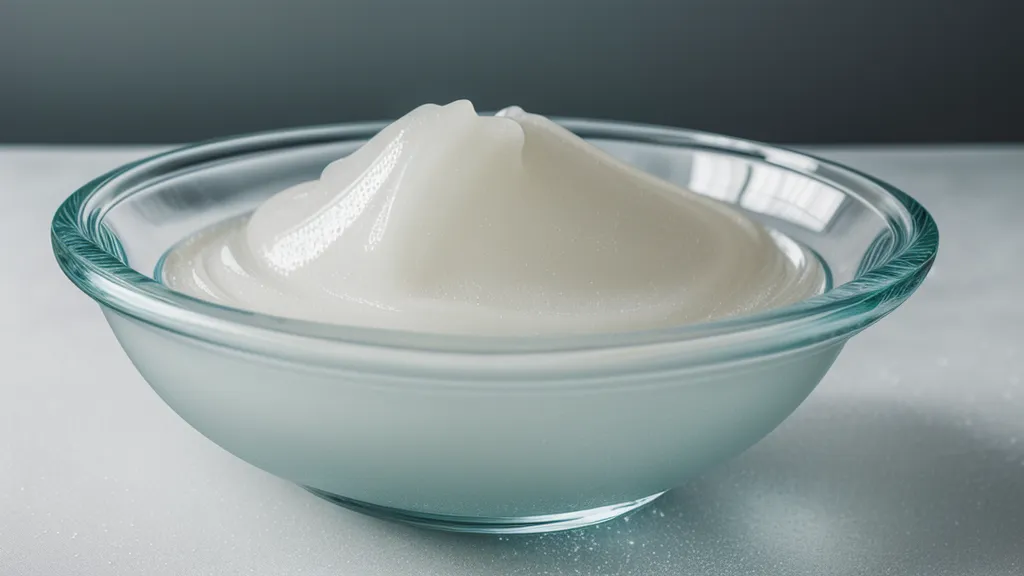
What Should Go in the Pot Instead of Flour?
Pureed cauliflower is the answer that surprised me the most. Steam a whole head until it falls apart, blend it with a little broth until it's silk-smooth, and stir it into soup for a creamy body with none of the cabbage smell people expect. It's basically the soup version of the cauliflower-rice swap a lot of people already use for rice — same vegetable, different job.
Beans do something similar from the other direction. Chickpeas carry a Glycemic Index of just 28 according to the International Tables of Glycemic Index and Glycemic Load Values — nowhere close to flour's 71 — and blending half a can of white beans into a pot of white chili gives you a thick, hearty texture along with fiber that slows down how fast any of it hits your bloodstream. Fatima, a colleague a few desks over who brings a pot of her homemade harira to every office potluck, asked me once if there was a way to keep that soup just as hearty without the GI hit. The answer turned out to be the lentils and chickpeas already doing most of the work in her recipe — she just needed to go lighter on the flour thickener most harira recipes also call for.
Almond flour works too, though differently. It won't gel the way wheat flour does, but it adds a nutty thickness and some fat that helps slow glucose absorption. Whole wheat flour, by the way, isn't the automatic fix a lot of people assume it is — how finely it's milled changes how fast it digests, which is a rabbit hole I'll leave for another time. A reader named Lynda, who's emailed me regularly since she first found my glycemic-index cheat sheet, is the kind of person who'll send me a photo of two different receipts just to prove almond flour costs a different amount at Trader Joe's than it does at Safeway. She's right every time, though I couldn't tell you the actual gap off the top of my head. I use almond flour most in the recipes I wrote about for low-GI slow cooker meals, since it holds up through hours of low heat better than most other options.
The Starch-Free Trick That Changed My Roux Game
Egg yolks and lemon juice do something no flour-based roux ever managed. The Greek method is called Avgolemono: temper the yolks by slowly whisking in hot broth, then pour the mixture back into the pot, and you get a richer, more luxurious mouthfeel than any roux without a single grain of starch involved. A splash of vinegar stirred in at the end does something in the same spirit — brightens the whole bowl, and from what I understand about acetic acid's effect on post-meal glucose, might soften the spike from whatever carbs are still in there. That's a topic with its own dedicated deep-dive, though, and I'm not going to pretend I've done the research justice here.
Skip the Supplement Aisle for This One
Look, a capsule won't fix what a roux is doing to your blood sugar, and I learned that the hard way. After reading a wellness blog that swore by it, I tried chromium picolinate for a while, convinced it would quietly cancel out whatever my cooking was doing wrong. Nothing changed — not my energy, not any number on a follow-up test, nothing I could point to and call a result.
Figuring out whether any supplement on that shelf is actually worth trying is its own evaluation process — ingredients, dosing, interactions — and that's deliberately not what this post is about. What I can tell you is the only thing that ever moved my numbers was changing what went into the pot, not what I swallowed next to it. If you're choosing between a new thickener technique and a new supplement, start with the pot every time, and treat the supplement question as a separate conversation to have with an actual doctor.
Testing Whether a Thickener Is Actually Working for Your Blood Sugar
The honest test is the same one I use for anything else I eat: check blood sugar after the bowl is empty and see what the number actually did. Exactly when and how long to wait is a whole protocol worth its own explanation, so I won't improvise the details here — the short version is that soup is exactly where my numbers used to go sideways, so it's exactly where I still check first when I try something new.
Numbers aren't the only signal, though. Sitting through four back-to-back meetings on a Friday afternoon without once feeling that heavy, foggy pull toward a nap is a result I trust just as much as any glucometer reading, and it's the kind of thing a lab number can't fully capture. I kept the specific tools in my kitchen I use to track these effects simple on purpose, because the more complicated the tracking gets, the less likely anyone actually keeps doing it.
What to Expect the First Few Times You Skip the Roux
Cauliflower puree will never smell like butter and flour browning in a cast-iron skillet, and I still miss that smell more than I'll ever admit in public. Life with a prediabetes diet is a trade-off, not a perfect swap, and some days that trade feels fair and some days it just feels like a loss with extra steps.
None of this makes me a dietitian or a doctor, and I have zero medical training to back up anything here beyond what's worked in my own kitchen — so talk to your own doctor before you overhaul your diet based on one HR manager's soup experiments. People react to fiber and starch differently, and what settled my stomach might not settle yours. Konjac root, for instance, is roughly 90 percent fiber and plenty of people swear by it; in my kitchen it was another slime incident, which is exactly the point — keep testing until you find what actually works for your body, not someone else's.
Here's the test I actually use before any new thickener earns a permanent spot in my kitchen: does it hold up through a reheat without weeping liquid everywhere, and do I still feel steady three hours after the bowl is empty. If both answers are yes, it stays in rotation. If either one is no, back to the drawing board — and there's always another vegetable, bean, or egg yolk waiting to be tested.