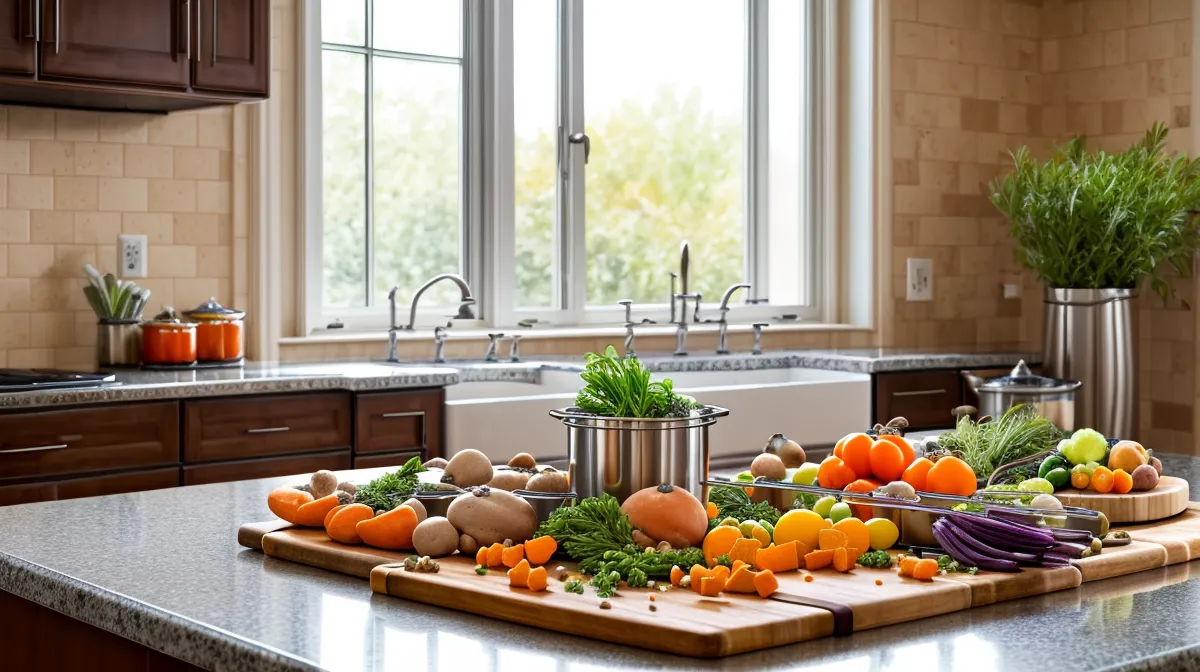
What if the healthiest thing on your dinner plate is doing nearly the same thing to your blood sugar as a doughnut? I didn't think to ask myself that question until my glucometer — the one I bought out of pocket after my prediabetes screening — answered it for me, on a night I was genuinely proud of the sweet potato I'd just roasted. I had no idea yet that glycemic index could swing that wildly depending on how I cooked the same vegetable, and the number on the screen did not care how virtuous it looked going into my oven.
The Wellness Screening That Called My Bluff
Working in HR means I spend a good chunk of every fall talking up our company's wellness screening — handing out the forms, nudging people to book their slot, acting like the whole thing is a formality. So when my own results came back with an HbA1c between 5.7% and 6.4%, the range that gets you labeled prediabetic, it felt like getting caught by my own fire drill. I'd spent years telling other people their health mattered without ever checking whether mine did.
Denial got me through the first month just fine. I decided the lab must have messed up, blamed the latte I'd had before the blood draw, and kept eating exactly like always. Panic showed up when the follow-up numbers came back worse, not better. That's when I signed up for one of those meal-kit subscriptions built for people managing diabetes, convinced a box on my doorstep would fix what I couldn't manage myself. Three deliveries in, I was scraping gray, cardboard-tasting stir-fry into the trash and canceling before the fourth one shipped.
So I went back to basics, or what I thought were basics. Sweet potatoes topped every list of foods I was supposed to lean on — fiber, potassium, vitamin A, all the things a body fighting insulin resistance apparently craves. I baked a tray the old way: skins pricked, foil underneath, roasted until they went soft and syrupy. Staring at the scorched sugar stuck to my baking sheet, I had to admit something I didn't want to. Whatever I'd just eaten, my body processed it almost exactly like the white bread I still miss more than I'll ever say out loud at a dinner party.
Why Does Baking Spike the Glycemic Index So Badly?
A sweet potato's cooking method moves its glycemic index more than almost any other vegetable I've tested in my kitchen. Baked, it can land anywhere from 80 to 94, practically neck-and-neck with pure sugar, while the same root steamed quickly instead can drop into the mid-40s. I didn't understand the gap until I went looking past the food blogs and found the actual chemistry behind it, which I still keep coming back to on this glycemic index reference chart whenever I second-guess a new vegetable.
The reason comes down to a single enzyme, beta-amylase, that sweet potatoes carry naturally. Hold a sweet potato in slow, dry oven heat and the enzyme gets busy chopping the root's long starch chains into maltose, a sugar nearly as potent as glucose itself — which is exactly what that syrupy pool under a roasted sweet potato actually is. Steam a potato hard and fast instead, and you blow through that enzyme's comfort zone before it finishes the job. Less time in the window, less maltose, less of a spike waiting for me on the other side of dinner.
Texture Turned Out to Be the Real Variable
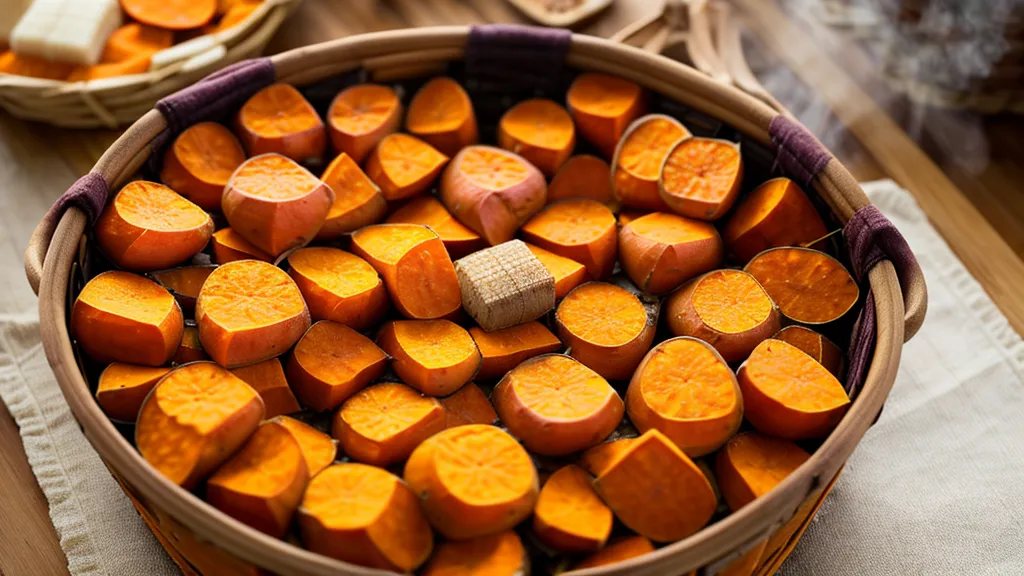
Knowing the chemistry didn't save me from a second surprise. Most recipes tell you to steam root vegetables until they're soft enough to mash, and for weeks that's exactly what I did, only to watch my numbers climb anyway on nights I was sure I'd done everything right. The deeper a sweet potato gelatinizes, the more completely a steamer breaks down its structure, and an overcooked batch handed my digestion a head start it didn't need. Pull the cubes out while they still push back slightly against a fork, and that head start disappears.
Look, I am not a doctor or a dietitian, just someone who turned her kitchen into a test kitchen out of necessity. But once I started pulling the basket at nine minutes instead of fifteen, the clean steam smell replacing that caramel-and-char smell from the oven told me I'd gotten it right before I even checked my monitor. No scorched pan to scrub afterward, either, which felt like its own small win some nights.
Running My Exact Steaming Routine, Step by Step
Here is the thing about turning kitchen science into a repeatable habit: you cannot just toss a whole sweet potato in a pot and wander off. The routine I landed on after months of trial and error comes down to a handful of small, deliberate choices, not a special gadget or an expensive ingredient.
I scrub the skin instead of peeling it, since the peel slows digestion down and keeps the flesh from falling apart under high heat, then cut the flesh into cubes about half an inch across so the heat reaches the center fast instead of lingering in that maltose-friendly zone. The water goes to a full, rolling boil before the steamer basket ever touches the pot — cold-starting it just drags out the time the potato spends warming through the range where that enzyme does its damage. From there I set a timer for nine to eleven minutes, no guessing, and test one cube with a paring knife at the nine-minute mark. It should give way cleanly with a little resistance left in the center. Butter-soft means I've gone too far.
The last step matters just as much as the first four: the moment the timer goes off, I pull the basket and spread the cubes across a rimmed sheet pan in a single layer instead of leaving them in a covered pot. Residual steam in a closed pot keeps cooking them for another ten minutes, which quietly undoes everything the timer just protected.
What Happens After They Cool
Once the cubes are fully cool, I load them into glass containers for the week's meal prep and let them sit in the fridge overnight. Something shifts in the starch during that cold stretch that keeps the next day's portion gentler on my glucose than it was the day I steamed it, a trick I didn't believe until I tested it myself and now trust more than almost anything else in this routine.
I never eat the cubes on their own anymore, either. They go into a bowl with olive oil, a sprinkle of smoked paprika, maybe some salmon or roasted greens alongside, building a plate instead of serving a side, something I started doing around the same time I was rebuilding my lunchbox after a prediabetes reality check. Eating them inside a fuller meal instead of alone changes how my numbers behave every single time.
Noel, a college friend who somehow turns every one of my rambling updates into a spreadsheet, got hold of my notes partway through this project and color-coded the whole thing without asking: cook time, texture, next-day numbers, all of it. It was equal parts annoying and the most useful thing anyone did for me, because suddenly I could see which batches actually worked instead of just remembering the ones that didn't.
Finding Peace With a Vegetable I Used to Fear
Six weeks into steaming instead of baking, I sat through four back-to-back HR meetings on a Friday afternoon and realized somewhere in the last one that I hadn't once thought about food, hadn't hit that familiar wall of exhaustion that used to send me hunting for something sweet by mid-afternoon. That absence was the whole point, and I almost missed it because nothing dramatic happened, which turns out to have been exactly the win I'd been steaming toward.
When I mentioned the steaming routine to Amara, someone I met at a nutrition talk at the Kirkland library and have traded notes with ever since, her first question wasn't about the recipe. She wanted to know if I could actually keep doing this six months from now, or if it was just another phase before I quietly went back to old habits. That question stuck with me longer than any of the chemistry did. Some evenings I walk the bluff trail at Discovery Park turning it over. What my kitchen taught me about glycemic load months before this answered it before Amara even asked: the swap that lasts is never the one that demands the most effort. It's the one small enough, a knife, a timer, a basket I already own, to still be doing six months from now.