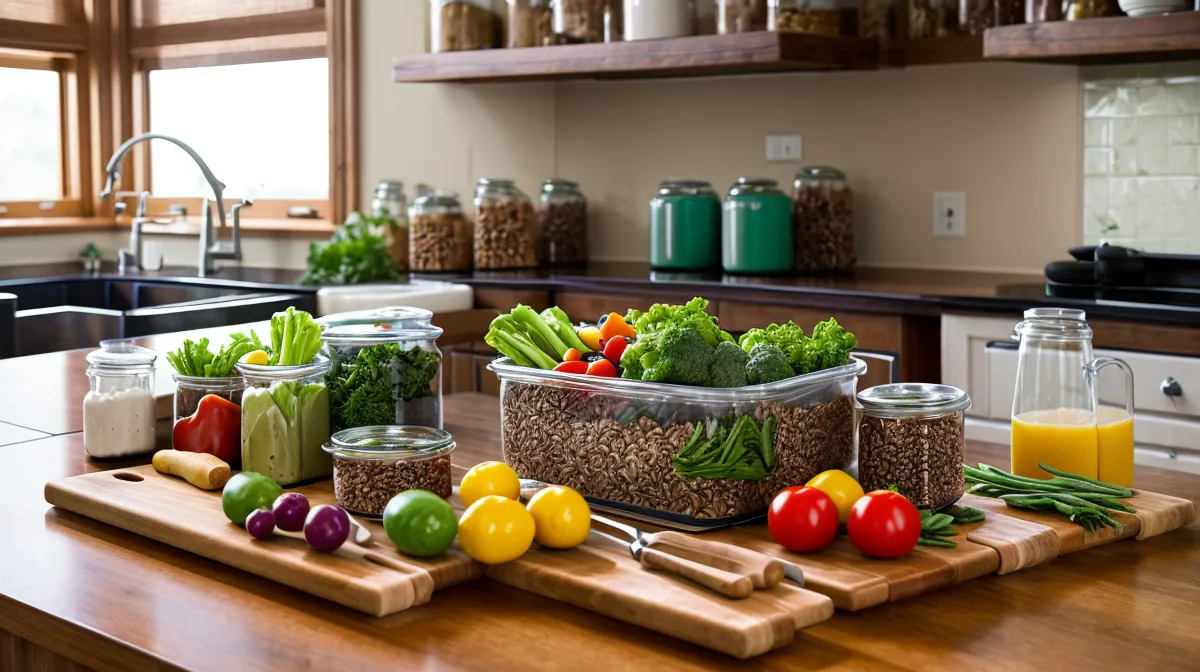
I'm rinsing a bag of dried lentils in the sink, rain ticking against the window above it, when my phone buzzes with another email from Corbin. I already know the gist before I open it: he thinks popping a Gluco6 capsule should flatten out blood sugar no matter what's actually on the plate, and that building a whole low glycemic meal plan around it is overkill. He's wrong, but it's a fair wrong — a lot of people assume a supplement works like a dimmer switch you can bolt onto any eating pattern. It doesn't. It only earns its keep inside a structure, and that structure is the part nobody wants to hear about.
Quick disclosure before we go further: this post contains affiliate links, and if you buy through one of them I earn a small commission at no extra cost to you. I only write about products I've actually used in my own kitchen — Gluco6 included — and you can read my full disclosure policy for the specifics.
The Capsule-Fixes-Everything Myth
Here is the thing: three years ago I would have believed Corbin too. I was the HR manager who organized my own office's biometric screening, sent out the cheerful calendar invites, and then sat across from my own results wondering how I'd managed to fail a test I'd scheduled for other people. My numbers landed in that stretch between normal and full diabetes, the one nobody warns you about until you're standing in it.
Denial came first — I spent a few weeks eating exactly the same deli sandwiches and telling myself the test was a fluke. Panic came next, once a follow-up confirmed the numbers hadn't moved. That's when I started treating my kitchen like a lab, which is a dramatic way of saying I started reading labels like my whole sense of metabolic health was riding on it, because some days it felt like it was.
If you've read about what my suburban Seattle kitchen taught me about glycemic load, you already know I unlearned almost everything I thought was healthy — sweet corn and instant oats included. Before I landed there, I tried keto for three weeks and felt miserable by day ten: foggy, irritable, obsessed with the carbs I wasn't eating. It didn't fail because keto is inherently bad. Wrong lever entirely: glycemic load, not carb grams. Cutting everything at once told me nothing useful about my own body.

So What Does Gluco6 Actually Need From You?
Gluco6 caught my attention because of its insulin sensitivity angle — a different lever than glycemic load, and one a meal plan alone doesn't always reach. The capsule format mattered more than I expected going in. I already take a handful of vitamins with my morning tea, so one more capsule folded into that habit without friction. Their 60-day refund window also made the decision easier; if my body didn't respond, I wasn't stuck with a bad call. Pricing shifts depending on supply and promotions, so I'd check the vendor's own page rather than trust a number I quote here.
My week only works because it has a rhythm, not because the capsule is doing something magic. Sunday is batch-prep day — trays of cruciferous vegetables going into the oven while I catch up on laundry, and learning how to roast cauliflower for stable blood sugar gave me a base that doesn't turn to mush by midweek the way rice always did. Protein shows up next to every carb on purpose — grilled chicken, baked salmon, whatever keeps a meal from being just a plate of starch. Greta from across the cul-de-sac has a habit of leaving a bag of something from her garden on my doorknob without warning, usually zucchini, and half my batch-prep improvising happens because of her. Gluco6 itself gets taken with the first real meal of the day, which for me lands mid-morning, after the early commute and the first round of meetings settle down.
If capsules aren't your thing, something like Sugar Defender uses a liquid-drop format instead, easy to stir into tea, worth a look if swallowing another pill feels like one habit too many. For my own mornings, a capsule I can toss back with water and move on kept things simpler than measuring out drops before coffee.

Building a Weekday Around It
Breakfast happens mid-morning, not at dawn, because that's when my schedule actually allows food — scrambled eggs, a handful of spinach, a quarter of an avocado, a few steamed berries if I remembered to buy them. This is also when Gluco6 goes down, with a full glass of water, because healthy fat and fiber first thing cushions whatever glucose bump the rest of breakfast causes.
Lunch is a mason jar I built the night before — chickpeas, cucumber, shredded rotisserie chicken from Costco, olive oil and vinegar. Having it already assembled is the only reason I don't end up at the breakroom snack table most afternoons; reactive hypoglycemia is real, that crash-then-crave loop after a too-fast carb hit, and a jar with protein already sitting in it heads it off before it starts.
I remember a particular Friday that happened to be wall-to-wall HR meetings — four of them back to back, the kind that used to leave me scraping through my desk drawer for anything with sugar in it by the third one. That day I noticed, somewhere around the fourth meeting, that I hadn't thought about food once. Not a craving, not a slump, nothing. It wasn't the capsule. It was lunch sitting in the fridge exactly where I'd left it the night before.
Dinner is usually salmon over spiced lentils with sautéed zucchini — those same zucchini Greta keeps leaving on my porch, more often than I can use them fresh. I wrote before about how to support insulin sensitivity with Gluco6 and low-GI living, which goes into why pairing slower carbs with protein and fat does more for a steady evening than any supplement does on its own.
Where the Myth Actually Breaks
Here's the boundary nobody puts in the marketing copy: none of this holds up the moment your schedule stops being yours. Frequent travel is where the whole structure — not just the supplement, the entire rhythm — falls apart.
On an ordinary week, my evening walk loops through Discovery Park, and the whole day before it ran on a schedule I controlled start to finish. Put me in an airport instead and that control disappears. Flights get delayed. The only kiosk still open at the gate is selling a croissant or a sugary yogurt cup, and taking a glucose-support capsule next to either of those, or on an empty stomach because the flight got pushed back three hours, doesn't produce the same steady feeling it does at home.
This is the part that actually corrects the myth Corbin keeps repeating. A capsule does not override chaos. It supports a rhythm that already exists. Strip the rhythm away — through travel, through a brutal stretch at work, through anything that scrambles when and how you eat — and the capsule stops being able to do much of anything. That's not a flaw in Gluco6 specifically; it's true of every supplement in this category, and it's the one thing the marketing never says out loud.
Progress Over a Perfect Routine
Look, some weeks my prep is flawless, the evening walk happens every single day, and the capsule is just one more habit among several — though I still miss white bread more than I'll ever admit in an actual meeting room. Other weeks a brutal budget review eats my afternoon and I end up with a slice of breakroom birthday cake and a familiar flash of guilt afterward. Both weeks are real. Neither one undoes the other.
If you're sitting somewhere in that same prediabetic gray zone and wondering whether a product like this is worth adding, start with your actual week of meal planning before you start with the bottle. Look at your meal timing, not your supplement cabinet, and build the rhythm first — the capsule is reinforcement, never the foundation. Check out Gluco6 on their official site to see whether the insulin-support angle fits what you're already building, and take it one steady meal at a time, not one magic capsule at a time.