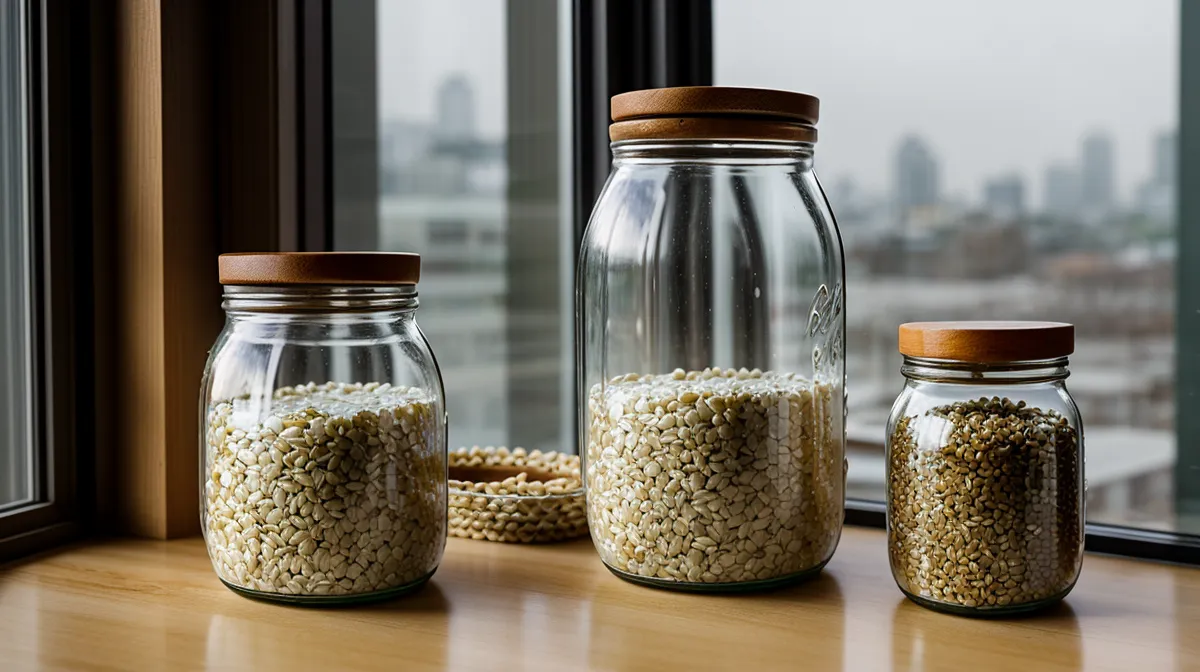
A softer, almost mushy grain spikes your blood sugar more than one you cook firm and al dente — or so I assumed. I carried that assumption around my kitchen in the Bothell-Kenmore corridor for longer than I'd like to admit, certain that firm was the only safe way to eat a starch once a wellness screening at work put me on the wrong side of a prediabetes diagnosis. A bulk bin of pearled barley from PCC Community Markets in Edmonds was supposed to be my easy low-glycemic swap for rice. Instead it turned into the thing that proved me wrong.
Here's the myth, stated plainly: if a grain turns soft and sticky, it has broken down further, and your body absorbs it faster. It sounds logical. For barley, it's also backwards enough to matter if you're managing prediabetes and trying to keep your numbers out of a doctor's worried-looking chart.
A reader named Corbin Weathersby pushed back on this exact point in an email. He was convinced that cooking barley until it went soft and clung together had to be worse for his blood sugar than keeping it firm — more broken down, easier for his body to grab onto. It's the kind of argument that keeps me honest, mostly because it's the same thing I believed the first time I dumped dry barley into a pot like I was making instant rice.
The Low-Glycemic Myth I Had Backwards
Before barley, I tried fixing my numbers by forcing myself onto a rigid three-meals-a-day schedule with absolutely no snacks allowed — the kind of plan that looks disciplined written down on paper. It fell apart fast. I was raiding the vending machine down the hall from my desk most mornings, furious at my own willpower, no closer to steady blood sugar than before I'd started.
Barley isn't glamorous, but the numbers are hard to argue with. Pearled barley sits around a glycemic index of 28, compared to white rice soaring into the 70s or 80s. That's glycemic index, not glycemic load — a different calculation I won't untangle here, but worth knowing the two aren't interchangeable. The fiber is doing a lot of that work: USDA data puts dried pearled barley at roughly 17 grams of fiber per 100 grams, which is more metabolic cushioning than most grains in that same bulk aisle can offer.
What Actually Determines How Barley Hits Your Blood Sugar
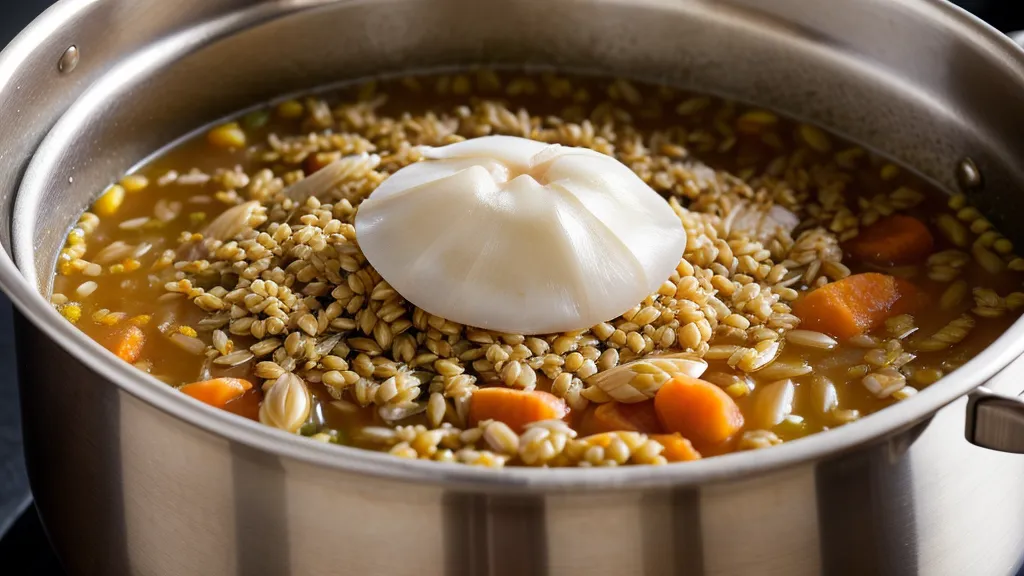
Ratio matters more than people give it credit for. One part dry barley to three parts liquid is the standard stovetop ratio, and it gets you a chewy, intact grain that holds its shape — assuming you don't rush it. My first attempt, boiled hard and fast like I was making rice, came out tough and rubbery and genuinely hard to choke down. Toasting the dry grains first in the pot for a couple of minutes, until they smell nutty instead of raw, changes the final texture too — it's a small step most recipes skip, and it's the difference between barley that tastes like an afterthought and barley that tastes like you meant to cook it.
None of that, though, is the part that changed my numbers. The part that mattered was realizing the glycemic hit isn't fixed the moment the grain finishes cooking. It keeps changing after the pot comes off the stove, depending on what you do next.
Cook It Soft, Chill It Overnight: Where Resistant Starch Comes In
So here's the correction to the myth. Cooking barley longer, until it's genuinely soft, even a little mushy, then chilling it for several hours before you eat it, lowers its glycemic impact rather than raising it. The chilling converts some of that starch into what's called resistant starch — I'll leave the deeper biology of that to people who've written whole articles on it, but functionally, it behaves differently in your body than starch you just scooped hot out of the pot. Soft and chilled is not the same thing as soft and fresh.
Stirring a pot of barley once it's gone fully soft feels different than stirring it at the al dente stage — there's a sticky pull against the wooden spoon, a resistance on the first turn that tells you the starch has let go in a way it hadn't ten minutes earlier. That texture used to read as "overcooked, ruined" to me. Now I know it's closer to "exactly on schedule."
My neighbor Greta Mabunda, who grows more vegetables in her side yard than any two households could reasonably eat and shows up with armfuls of them whether you asked or not, caught me mid-experiment one afternoon with three different pots of barley going at three different cook times. She asked, not unkindly, if I'd lost my mind. I handed her a bowl of the soft, chilled batch turned into a cold salad with cucumbers and feta, and she stopped asking questions after the second bite.
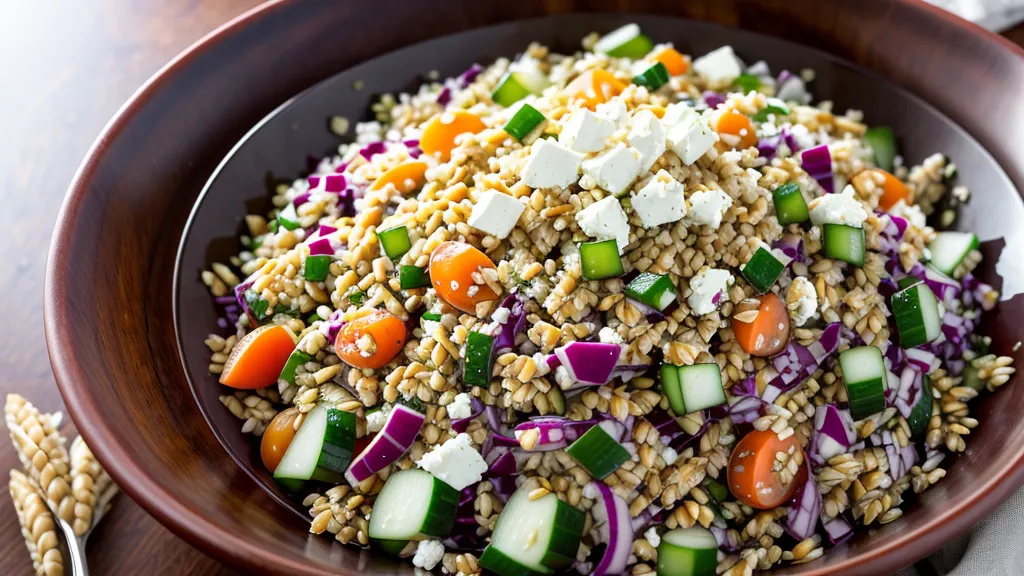
That salad is the whole argument in one bowl. No spike, no crash, and it tasted like something I wanted to eat, not something I was choking down because a lab result told me to. This is what matters for sticking with any of this long term. If you're still mourning the bread this diagnosis took from you the way I was, you might recognize yourself in my sourdough withdrawal journey, which is really just me working through the same grief with a different grain.
The Method, Start to Finish
If you want to replicate this, the process is simpler than the explanation. Toast the dry barley in a dry pot over medium heat for two to three minutes, until it smells nutty rather than raw. Add your liquid — water or low-sodium broth both work — at a 1:3 ratio for al dente, or closer to 1:4 if you already know you're chilling it. Bring it to a boil, then drop the heat to the lowest setting, cover tightly, and leave it alone. Twenty-five to thirty minutes gets you firm and chewy. Forty to forty-five gets you the soft, nearly-falling-apart texture the chilling method actually wants. Then comes the one non-negotiable step: spread the cooked barley on a baking sheet so it cools fast, then move it to a container in the fridge for at least twelve hours before you eat it, reheated or cold.
I keep notes on batches like this the way other people keep notes on anything they're trying to get right — which ratios held up, which textures I liked, what a given week's grocery budget actually allowed. Some of that lives in my low-GI lab notes, which started as a way to keep my own kitchen honest and turned into something closer to a running argument with myself.
Where I've Landed With the Chewy Grain
I won't pretend barley is a fluffy dinner roll or a slice of good sourdough. It has weight to it, a chew that never lets you forget you're eating something your body has to work at. But somewhere in the middle of testing ratios on the counter under the corkboard where I've pinned every glycemic chart I've printed since my diagnosis, next to the jars of lentils and steel-cut oats I never used to own, it stopped feeling like punishment.
The clearest sign of that: reaching two in the afternoon at my desk and realizing the headache that always used to show up right on schedule simply hadn't. Not a dramatic before-and-after. Just an ordinary afternoon that stayed ordinary, which for someone who spent months panicking over her own wellness screening, counts as a genuinely good outcome. Barley didn't fix my prediabetes. It just became one piece of a kitchen, and a metabolic health routine, that finally makes sense to me.
None of this replaces an actual conversation with your doctor or a registered dietitian, especially if you're managing a diagnosis like mine — what worked for my kitchen and my numbers isn't a guarantee for yours. But if a grain this unglamorous can quietly correct a myth I'd believed for years, it felt worth writing down.