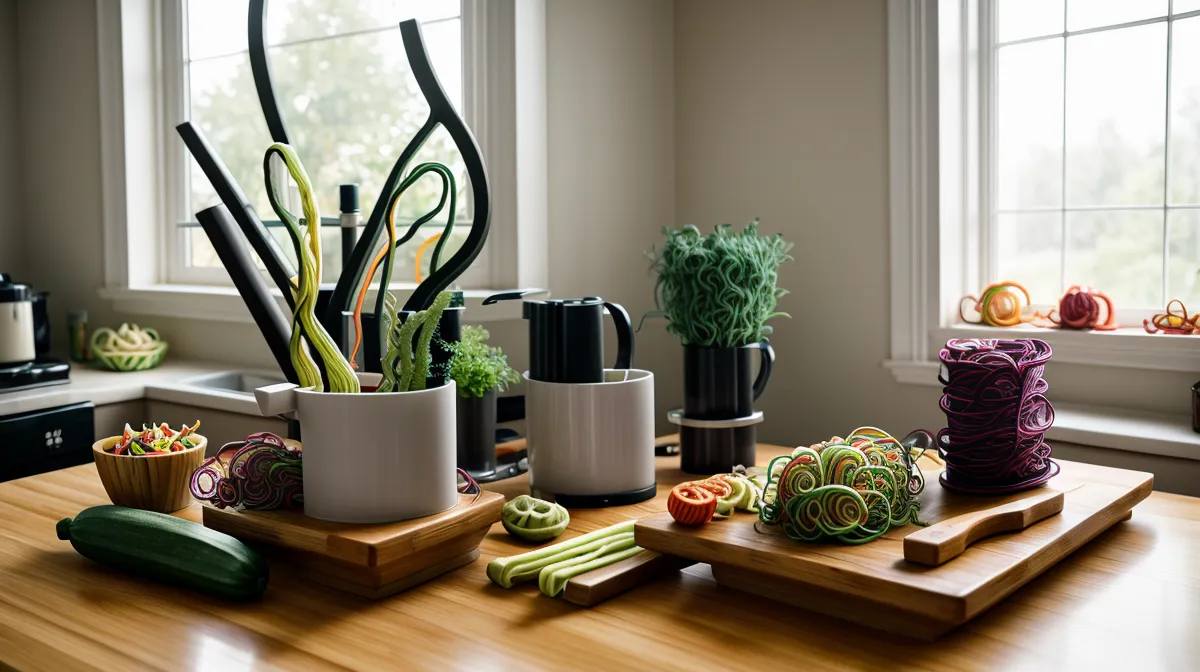
Four vegetables earn a permanent spot in my spiralizer rotation. Sweet potato isn't one of them, even though its bright orange ribbons are usually the first thing people reach for when they swap pasta for produce. Watching my glucose numbers do exactly what a bowl of white pasta does taught me that the tool matters less than knowing which vegetables belong in it — a lesson that matters a lot when you're rebuilding a low-glycemic kitchen after a prediabetes diagnosis.
White pasta sits at a glycemic index around 70 — solidly in the range that pushes blood sugar up fast. Spiralized zucchini comes in closer to 15, with a glycemic load per serving of roughly 2. That gap is the entire reason this swap works, and it's also why it doesn't work the same way for every vegetable you're tempted to run through the blades.
Vegetable noodles don't behave like wheat pasta because they skip the mechanism that makes pasta pasta in the first place. There's barely any starch there to begin with, so nothing gelatinizes the way it does in a pot of boiling fettuccine. A zucchini ribbon will never quite fool you, no matter how good the sauce is.
The Four Vegetables Worth Spiralizing
Zucchini, cucumber, daikon radish, and chayote squash are the four I trust for a genuine pasta swap. All four are low in starch, low on the glycemic index, and hold together well enough under a blade to actually resemble noodles once they hit a plate. Cucumber works best cold, closer to a noodle salad than a hot dish. Zucchini takes heat well once you handle its water content correctly — more on that shortly. Daikon and chayote have the most bite of the four, closer to al dente than anything else on this list.
The rule I use now is closer to how I'd screen a stack of resumes than anything from a cookbook: if a vegetable is dense, starchy, and sweet when raw — more root than stem — it probably isn't going in the spiralizer for a pasta swap. Sweet potato, parsnip, and beet all fail that test for me, even though each one is a perfectly good vegetable in a different context.
The Salt-and-Sweat Technique for Zucchini Noodles
My first attempt at zucchini noodles was a small disaster. I boiled them like actual spaghetti, three minutes in a pot of water, and ended up with a bowl of green mush sitting in a puddle. It tasted like wet paper, not pasta. Zucchini is over 90 percent water, and boiling it does exactly what you'd expect: it just gives that water somewhere to go.
The fix is what I call the salt-and-sweat method, and it's non-negotiable if you want texture instead of soup. Spiralize the zucchini, toss the ribbons with a little salt, and let them sit in a colander for about twenty minutes. An alarming amount of liquid drains out in that window. Squeeze the ribbons in a clean kitchen towel afterward. This step is the one people skip. It's also the one that matters most. Only then do you flash-sauté them, maybe two minutes, just enough to warm them through.
I tried other fixes before landing on this one, switching to diet sodas and artificial sweeteners across the board for a while, thinking that alone might buy me some room elsewhere. My numbers didn't care. The technique on the plate mattered more than what was in the glass next to it.
Getting the water out properly is also the difference between a dinner that sits fine overnight and one that doesn't. There's a particular kind of weekday morning — no fog behind my eyes, no second coffee just to feel upright — that only shows up after a dinner that didn't spike me. A properly drained zucchini noodle is part of how I get there now.
That kind of steady energy carries into the afternoon too. Keeping dinner's glycemic load low is part of how I beat the 3 PM slump without sugary snacks, since a spike the night before tends to show up as fatigue the next day, not just at the next meal.
Sweet Potato Behaves Like Pasta, Not Like a Vegetable
Here's the thing about sweet potato: it was the vegetable that fooled me longest. Spiralized into bright orange ribbons, it looks like the healthiest thing on the plate. It has more fiber than white pasta, and it's undeniably a vegetable. Run it past your own meter, though, and the picture changes. For a lot of people, a high-starch root like sweet potato spikes blood sugar just as hard as the refined pasta it's supposedly replacing.
Everybody's response is different, which is the frustrating and also kind of freeing part of this. A coworker of mine can eat a sweet potato with no issue at all; I watch my own numbers climb ten points on the same serving. That's not a reason to guess. It's a reason to check, every time you're unsure, instead of assuming a food is safe just because it grew in the ground.
I stopped guessing once I started using a system for calculating glycemic load myself instead of trusting a vegetable's reputation. It turns "is this safe for me" from a hunch into actual math, which matters more than it sounds like it should when you're the one living with the results.
Daikon and Chayote Hold Their Shape Better Than Zucchini
Daikon radish and chayote squash solve a problem zucchini never quite does: they hold their shape. Neither one turns soggy the way zucchini can, even with a decent sauce sitting on top for a while. Daikon has a faint peppery bite when it's raw, which mellows out completely once it hits a hot pan. Chayote stays crisp through most cooking methods, closer to a water chestnut than a squash in terms of texture.
Neither vegetable needs the salt-and-sweat treatment zucchini requires, since both hold far less water to begin with. A quick sauté is usually enough, just a few minutes, less time than zucchini needs. Look for daikon and chayote at Whole Foods or an Asian grocery store. They're not always sitting next to the zucchini at a standard supermarket, but they're worth the extra stop if you want something with actual bite instead of a wheat-pasta stand-in.
Prepping Ribbons Ahead Without Losing the Crunch
Weeknights don't leave much room for spiralizing vegetables after a full day of meetings, so I've shifted most of the prep to Sunday. Spiralize a batch, pat it dry, and store it in one of the stackable containers I picked up at Costco, lined with a paper towel to catch any extra moisture. It holds up in the fridge for a few days without turning limp, especially the daikon and chayote. Zucchini is the one that still needs to be used sooner rather than later.
Consistency on busy days matters more than any single perfect dinner, which is part of why I've also written about staying low-GI during a long commute. The prep habits that work on a slow Sunday are the same ones that make a rushed Tuesday survivable.
None of this makes a spiralizer some kind of cure. It's a tool, not a treatment, and prediabetes doesn't run on one gadget. I still miss real pasta more than I'll ever admit out loud. But the short version, if you're standing in a kitchen store deciding whether it's worth the counter space, is this: stick to zucchini, cucumber, daikon, and chayote, respect the salt-and-sweat step on anything watery, and treat every high-starch root vegetable the way you'd treat a slice of white bread: occasional, not automatic. That's the whole method, minus the trial and error it took to get here.