
A slice of watermelon and a bowl of brown rice sit on opposite ends of what most people assume about healthy eating, yet for the better part of a year I had the two exactly backwards, terrified of the fruit, casual about the rice. That mix-up is what glycemic index alone will do to you, and untangling it with glycemic load became the hinge of managing prediabetes in my own kitchen. Three years into rebuilding how I eat, low-GI cooking around here isn't a diet anymore. It's just Tuesday.
Here is the thing nobody tells you when your A1C lands in that 5.7 to 6.4 range: the shame arrives before the strategy does. I run a corporate wellness program for a living, which means I spent a solid month explaining away my own numbers like they belonged to a stranger's chart. Denial is a full-time job on top of an actual full-time job. The fix, once I found it, wasn't a different list of allowed foods — it was asking how much I was about to eat, not just how fast that food would hit my blood sugar.
The Index Told Me Half the Story
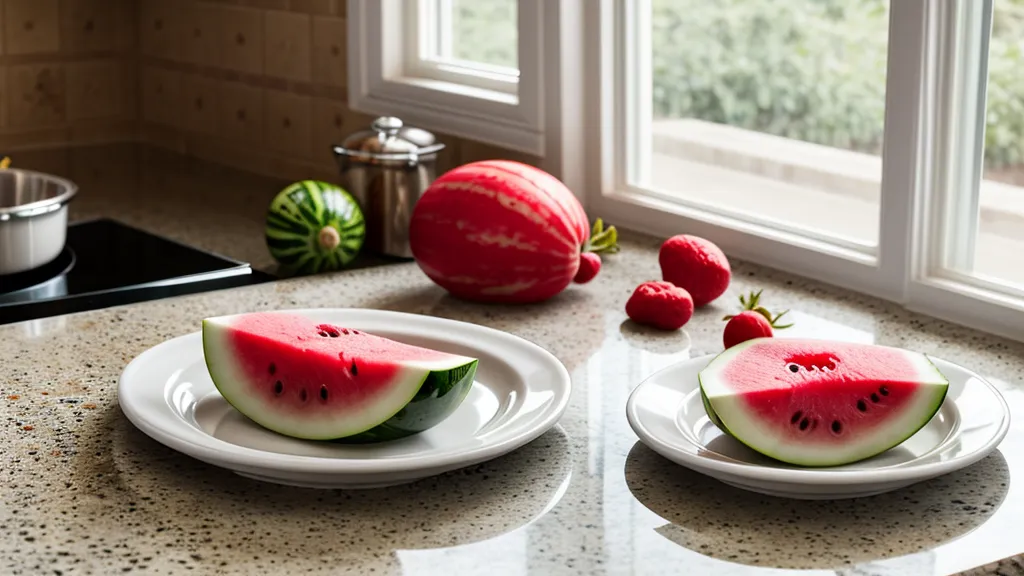
The Glycemic Index ranks food from zero to a hundred by how fast it spikes your blood sugar against a glass of pure glucose. Simple enough, except I started using that ranking as a verdict instead of a tool. Watermelon sat in the high seventies, so I treated it like contraband. Carrots and pumpkin joined the blacklist for the same reason, and my kitchen turned from a place I liked into a place I policed.
One memory still makes me wince: hiding a sourdough roll under a napkin at a work lunch, not because anyone was watching, but because I couldn't stand the idea of anyone watching me eat it. Fear does strange things to a plate of food. What the index never told me was how much of that roll, or that watermelon, actually landed in my body at once. Speed without quantity is only half an answer.
So What Does Glycemic Load Actually Change?
Glycemic Load fixes the part the index leaves out. It factors in the actual grams of carbohydrate in a real serving, not just how fast that carbohydrate theoretically hits your bloodstream. A small serving of high-index watermelon can land with a load down in the single digits, low enough that it barely registers against a full day of eating. A cup of brown rice, with its lower index but heavier carb load, can run past twenty. The safer-looking bowl does the more damage. That gap is where blood sugar stability actually lives, and it's why I stopped trusting an index score without asking about the load behind it too.

I've mapped out the actual arithmetic elsewhere, step by step, for anyone who wants the worksheet version. This isn't that post. What matters here is the shift in how I shop and cook: portion size stopped being a footnote and started being the whole ballgame. If you're curious how I track the bigger picture month over month, My Tracking Notes: Rebuilding My Metabolism After a Corporate Wellness Wake-Up Call has the messier, number-heavy version of this story.
Where My Prediabetes Management Plan Backfired
Not everything I tried worked, and the three-meals-a-day, no-snacks rule I gave myself early on is the clearest example. It sounded responsible on paper — structure, discipline, no mindless grazing. In practice, it left me starving by four o'clock most afternoons, standing in front of the office vending machine like the rule had never existed. A rigid schedule doesn't account for what your blood sugar is actually doing between meals, and mine crashed hard enough that I broke my own rule almost daily.
Why Did My Nurse Practitioner Go Quiet?
Seven weeks into actually weighing portions instead of just scanning index charts, I sat across from my nurse practitioner during a follow-up and watched her stop mid-sentence, eyes still on the printout, before she said anything at all. That quiet told me more than the number underneath it did. She wasn't expecting the shift that early, and honestly, neither was I — I'd been so focused on not messing it up that I hadn't stopped to check whether it was working.
What My Kitchen Looks Like Now
These days the counter in our kitchen — the peninsula with four stools where my family actually eats, out in the Bothell–Kenmore corridor northeast of the city — has a corkboard above it, covered in printed charts and sticky notes that make sense to nobody but me. The Mason jars on the open shelf nearby hold lentils and steel-cut oats, each one labeled in my own handwriting because I got tired of guessing what was what. The window over the sink looks out at a birch tree in the backyard, which is a nicer view than a vending machine, if nothing else.
Steel-cut oats are the closest thing I have to a ritual now — the earthy steam that lifts off the pot right around the three-minute stir is the smell I associate with mornings that don't feel like a countdown. My neighbor across the cul-de-sac, Greta Mabunda, shows up some evenings with more produce from her garden than any one household could reasonably eat, no warning, no knock, just a bag on the counter and a wave through the window. A reader named Corbin Weathersby, who first showed up in my comments section to argue that cauliflower rice could never satisfy anyone, still emails me monthly with his own numbers — mostly to tell me where he thinks I'm wrong. It keeps me honest.
Energy is the part nobody warns you about. I used to blame my 3 PM slump on being forty-four and overworked, but it tracked almost exactly with the days I ate the biggest, safest-looking bowl of something starchy at lunch. That pattern has its own long story — I've written about the Great Carb Crash in more detail elsewhere — but the short version is that keeping my daily load lower changed my afternoons more than any nap ever did.
Standing in the Cereal Aisle at QFC
If you want the one lesson I'd hand you before you even open a nutrition app: stop asking whether a food is allowed and start asking how much of it you're actually about to eat. I learned that standing in the cereal aisle at the QFC on Aurora Avenue North, comparing two boxes with nearly identical index scores and wildly different serving sizes. The index told me they were the same food, more or less. The load told me they weren't even close.
I still miss real, crusty white bread more than I'll ever fully admit out loud. That hasn't changed and probably won't. But trading the panic for a little arithmetic has changed how my body feels day to day, and that's a trade I'd make again without hesitating — even if it means keeping a notepad next to the toaster for the rest of my life.