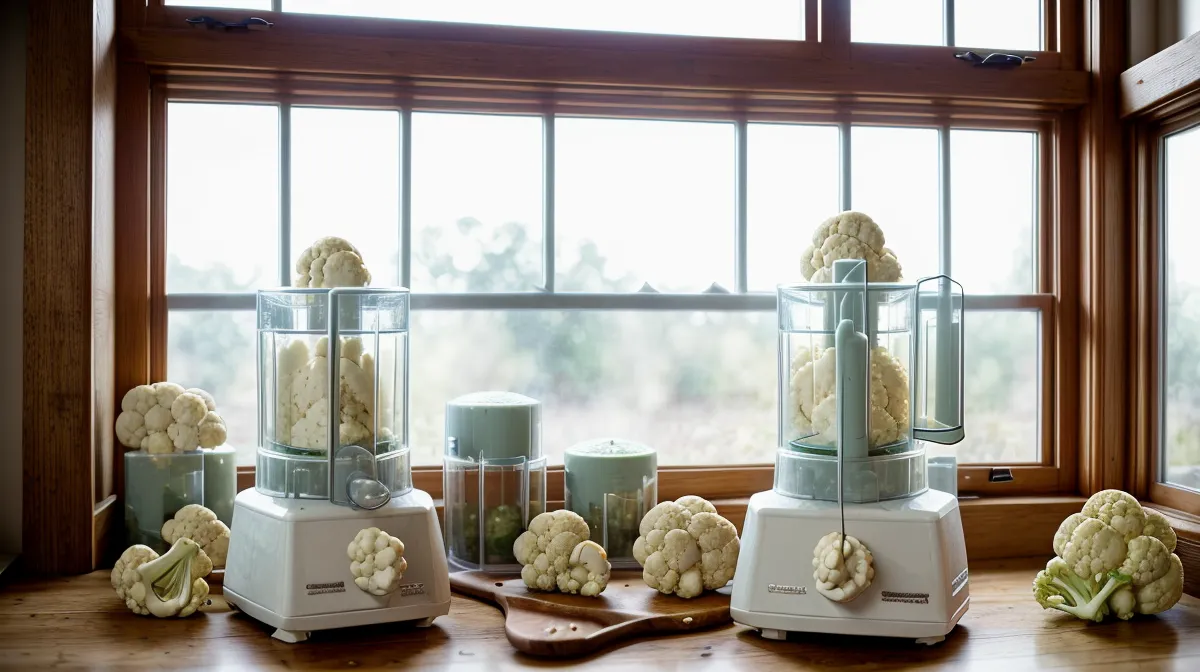
A stranger at the QFC on Aurora Avenue North, Seattle, stops her cart next to mine and asks the question I get more than any other these days: does cauliflower rice actually taste like rice. I laugh, because three years ago I would have asked the same thing while gripping a bag of jasmine rice like a life raft. The honest answer is no — and the more interesting answer is why that stopped mattering once prediabetes started running my grocery list.
Quick housekeeping before we get into it: this post has a couple of affiliate links, and if you click through and buy something I earn a small commission at no extra cost to you. I'm not a dietitian or a doctor — I'm an HR manager who failed her own wellness screening, which is its own special kind of humbling. Everything below is what actually happened in my kitchen, not medical advice, so run anything that matters past your own doctor first.
Here's what people actually want to know when they ask about the swap, roughly in the order they usually ask it.
Does Cauliflower Rice Actually Lower Your Blood Sugar Response?
Yes, and the reason has less to do with cauliflower being magic and more to do with math. White rice carries a heavy glycemic load — it isn't just how fast a food spikes you, it's how much of that food is sitting on your plate, the same way a grocery budget isn't just about the price of one item but how many of them end up in the cart. Swap a starchy, calorie-dense grain for a vegetable that fills the same physical space on the plate, and the math changes before you've even touched seasoning. That's the whole idea behind what I think of as the grain swap: find the lower-load stand-in that still lets a meal feel like a meal, instead of trying to eat a smaller portion of the thing causing the problem in the first place. I still miss the real thing more than I'll admit to anyone at work, but the math doesn't negotiate.
Why Homemade Cauliflower Rice Turns to Mush
Because cauliflower holds water like a sponge, and most people find that out the hard way, standing over a pan of what should be rice and is instead soup. My first attempt came out as a gray, wet pile that tasted like a swimming pool smells. The fix isn't a trick, it's heat and space: spread it thin on a sheet pan, give it real oven heat instead of a microwave, and don't crowd the pan if you're working on the stovetop, because steam is what turns texture into mush. Use the coarse side of the shredder too, not the fine one, or you'll end up with something closer to paste than rice. Some people cool and reheat their grains on purpose to change how the body handles the starch — a different rabbit hole entirely, since cauliflower isn't a starch to begin with.
Season it like you mean it, too — garlic, ginger, cumin, a squeeze of lime — because cauliflower rice with no seasoning tastes like a health class, and it doesn't have to.

Reading the Fine Print on Frozen Bags
Costco sells riced cauliflower in bags big enough to feed a family reunion, and it's usually the better deal if you're doing this every week. Here's the catch nobody warns you about: some of the seasoned or flavored blends have sugar added to them, right there on a bag of a vegetable, which is the kind of thing that makes you want to throw the whole bag across the parking lot. The sugar that sneaks into places you'd never expect it is exactly the sugar that undoes the point of the swap in the first place.
I read every label now — plain, unseasoned, nothing added — and I've stood in a grocery aisle longer than I'd like to admit, holding up the checkout line, squinting at an ingredient list like it owes me money.
The Bowl Matters More Than the Rice
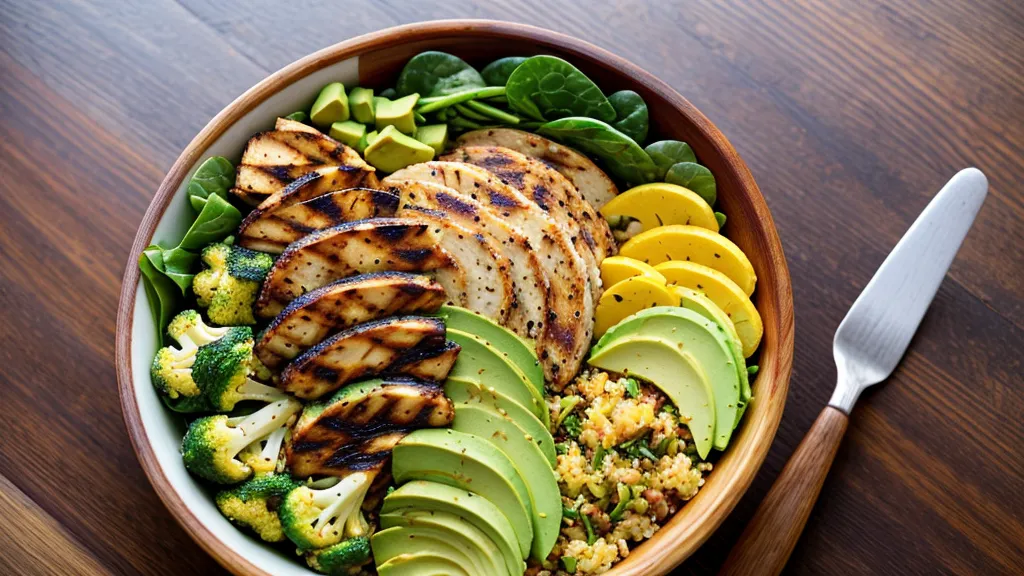
Swapping the grain and leaving everything else on the plate the same doesn't work; I found that out by being disappointed a lot. The plate has to be rebuilt around protein and fat holding the center, with the cauliflower rice playing a supporting role instead of being the whole show. Pair a starchy swap with real protein and you blunt the response even further, which is worth remembering before you build a bowl that's just vegetables and hope. Fiber does quiet, unglamorous work in the same direction. It's the boring hero nobody puts on a magazine cover, but it's the reason a bowl loaded with vegetables keeps you full longer than the same calories from a bowl of white rice ever did.
I build most of my dinners this way now: cauliflower rice as the base, a real portion of protein, something with fiber, and enough olive oil that it feels like food instead of punishment.
Will This Fix Your A1C by Itself?
No, and anyone telling you a grain swap alone will fix your A1C is selling something. A1C is an average pulled across months, not a single dinner's report card, so one good bowl of cauliflower rice isn't going to move it any more than one bad bowl of white rice is going to ruin it. My nurse practitioner didn't even say anything the day she pulled up my numbers; she just went quiet and stared at the screen a beat longer than felt normal, and that silence told me more than the actual number did. That same average is shaped just as much by what happens before nine in the morning as by what happens at dinner, which is its own topic and not one I'm going to pretend I've fully mastered.
Before I landed on cauliflower rice, I tried the version of this that looks good on social media, replacing breakfast with a green juice, feeling very virtuous about it, and then spending every morning white-knuckling it at my desk because I was starving again by ten. What actually worked instead was something boring: steel-cut oats, made slow, with the batter pulling back against the spoon on the first fold like it didn't want to be stirred yet. It's not exciting. It just keeps me full past ten, which the green juice never did. Sometimes the crash a couple hours after a breakfast that looked perfectly healthy has nothing to do with willpower and everything to do with what was actually in the glass.
Smoothies, Fruit, and Other Sneaky Traps
Smoothies get a free pass they haven't earned. Blending fruit breaks it down into something your body absorbs fast, so a smoothie that looks like the healthiest thing in the fridge can spike you harder than dessert would, purely because of how quickly the sugar hits after blending versus eating the fruit whole. Not all fruit behaves the same way once it's in your system either — that's its own can of worms, one I leave to people who study it for a living. My rule is simpler and less scientific: if it comes in liquid form and tastes sweet, I treat it with the same suspicion I'd give a vending machine candy bar, and I check how I feel an hour later instead of trusting how virtuous it felt going down.
Do You Need a Supplement Too?
You don't need one to make the swap work, but I use one anyway, mostly because the first few weeks of any diet change wreck my energy and I wanted something in my corner while I figured out the rest. Sugar Defender is the one that's been part of my mornings the longest, with a 180-day money-back guarantee that took some of the risk out of trying it in the first place. It's a liquid I drop into coffee or tea because the taste on its own is pretty earthy, and I won't pretend otherwise. What I liked is that it gave me something steady to lean on while I was still learning to manage sugar cravings without white-knuckling every afternoon.
A little acid before a carb-heavy meal helps too, which is why I picked up how to use apple cider vinegar stirred into salad dressing as one of the cheaper tricks in this whole routine, and why I keep a running list of low-GI snacks in my bag for the days work runs long and the vending machine starts looking reasonable. If a capsule fits your life better than drops, or you want something gentler on the wallet, GlucoBerry uses maqui berry and works through a different mechanism, going after how your body clears excess glucose rather than how you feel between meals — it's the one I point people toward when they want to start small. None of this replaces the actual food changes, it just makes them easier to stick with. Managing insulin sensitivity is a long game, and a supplement is a small piece of a much bigger plate.
Is the Swap Worth the Hassle?
Someone I know spends her energy on reformer Pilates classes twice a week, showing up rain or shine because that's the trade she's chosen for her own health. Mine goes into hauling a food processor out of the cabinet and turning a head of cauliflower into something that resembles dinner, a far less photogenic hobby that does the same basic job of buying back a little control over what my body does next. Walking after a meal helps too, in a low-effort way that doesn't get enough credit, since muscle working right after you eat pulls some of that glucose out of your bloodstream without you doing anything dramatic about it.
Three years into rebuilding my plate around glycemic load instead of habit, the swap still isn't glamorous. It's a Sunday afternoon that smells like a vegetable garden exploded in my kitchen, a freezer full of bags that all look the same, and a stubborn refusal to let one bad dinner turn into a bad month. If you're deciding whether it's worth trying, ask yourself one practical question before anything else: can you commit to the oven instead of the microwave, because that's the real line between a swap you'll keep making and one you'll quietly abandon after a single soggy batch. If you want a similar steady hand while you're rebuilding your own plate, Sugar Defender is still the one sitting on my counter every morning. I still think about white bread more than I'll ever admit to anyone at work, but I don't miss the mornings before any of this made sense.