Is a Sugar Craving a Signal or a Habit?
The pull toward something sweet at your desk often has less to do with self-control than with what you ate two hours earlier. That shift in perspective turned my entire approach to managing sugar cravings upside down, because for a long time prediabetes management felt like a moral test I kept failing. Low-GI eating didn't erase the cravings, it changed where they came from, and that shift in metabolic health mattered more than any amount of willpower I ever tried to summon.
Three years into rebuilding how I eat, I've watched two very different kinds of fixes go head-to-head in my own kitchen: the quick calm-down tactic and the slower structural swap. One barely survives contact with a Tuesday afternoon. The other holds up.
I Tried a Tonic Before I Trusted a Test Kitchen
I spent a full month drinking a cinnamon-and-honey tonic every morning before work, convinced it would blunt whatever was driving my 3 p.m. slump. Nothing about my afternoon changed: the same restlessness, the same hand hovering near the candy dish in the break room, the same fog by four o'clock. Cinnamon shows up in enough wellness roundups that I wanted it to work, and honey felt like a "better" sugar because it sounded natural. Honey wasn't really the problem. A spoonful of anything sweet on an empty stomach still reads to your body as a fast carbohydrate, tonic or not.
Swapping that tonic for a bowl of steel-cut oats made a bigger difference than the tonic ever did, not because oats are magic, but because they're slow. Something about the smell gave it away before the texture did: that faint, grainy steam curling up off the pot around the third minute of stirring, the moment it stops smelling like water and starts smelling like breakfast. That shift, from a fast liquid sugar hit to a slow-digesting bowl of starch and fiber, is basically the whole argument for low-GI eating in miniature.
What a Fast Fix Does to Your Blood Sugar
A quick fix and a structural fix are not solving the same problem, even when they're both aimed at the same craving. The Glycemic Index is just a ranking of how fast a carbohydrate turns into blood sugar, and a glucose spike is what happens when that ranking is high and the portion is generous too, a sharp rise your body then has to answer with a matching drop. That drop is where the next craving usually starts. Reframing that 3 p.m. slump as the tail end of a rebound, rather than a personal failing, changed what actually broke the loop for me. Not more willpower. A steadier meal three hours earlier.
Walking helps for a related but different reason. Muscle pulls glucose out of the bloodstream while it's working, no digestion required, which is part of why a short loop along the Mercer Island waterfront trail after dinner does more for my numbers than skipping dessert ever did. Pair that carb with a source of protein too — walnuts instead of dried fruit, eggs instead of toast alone — and the absorption slows down enough that the spike-and-drop cycle barely gets started.
Grams of Willpower Against Grams of Fiber
My college friend Noel Takemoto, who's twenty minutes away in Bellevue these days, turned his own numbers into a spreadsheet the week his doctor mentioned insulin sensitivity, tracking grams, minutes walked, even sleep, and cross-referencing it like he's auditing a budget. Comparing notes with him on our weekend farmers-market walks is where I noticed how differently we'd each solved the same problem: he manages cravings with data, I manage them with what's already on the counter. Here's the thing: his method works because he actually keeps up with it. Mine works because it doesn't require a spreadsheet at all, just a slower carbohydrate instead of a faster one.
Soluble fiber plays a bigger role in that difference than I expected when I first started paying attention to it. It slows how fast a meal turns into glucose, which is a big part of why a bowl of oats or a scoop of lentils holds me longer than something that lists sugar in the first three ingredients. Cooling a cooked potato or a batch of rice before eating it changes its structure enough to lower how quickly it digests, too — a trick worth knowing if plain willpower was never really the issue.
Two Ways to Walk Through the Same Grocery Aisle
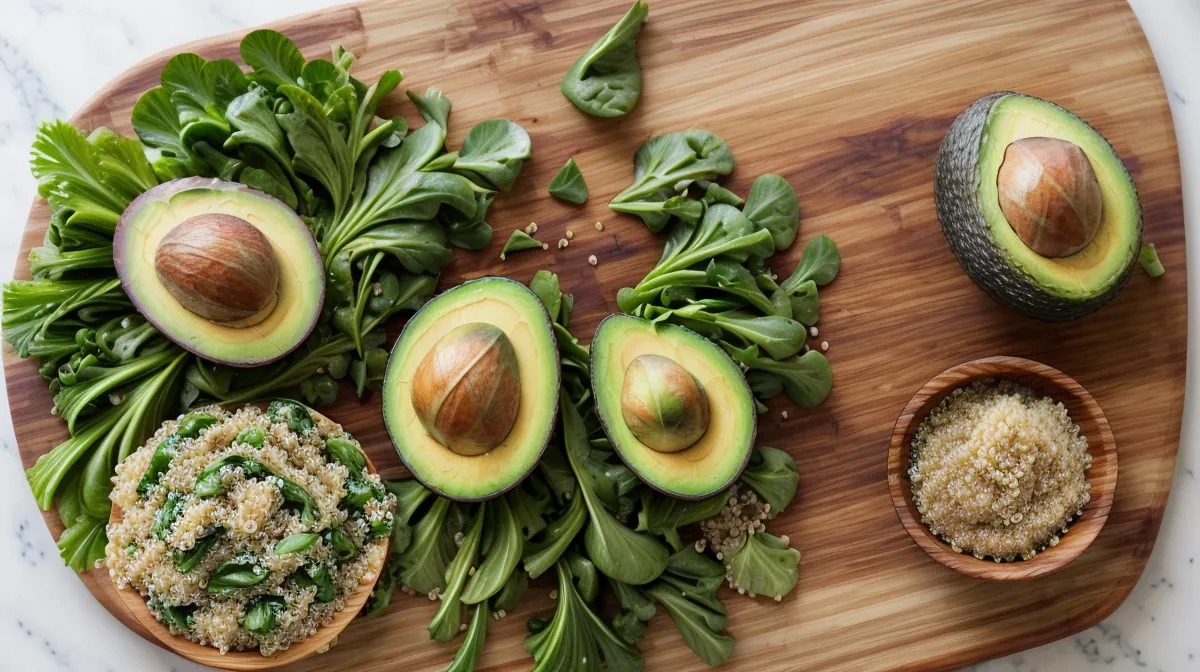
Grabbing quinoa instead of white rice is the simplest version of a low-GI swap, but the more useful skill turned out to be reading a label instead of trusting a package's front-of-box marketing. A "wheat" cracker and a whole-grain cracker can sit three inches apart on the same shelf with wildly different effects on blood sugar, and the only way to tell them apart is the ingredient list, not the color of the box. Working out roughly how much a plate of food will raise your blood sugar — its glycemic load, rather than just its glycemic index — turned into its own small hobby, one I wrote up in more detail in The Kitchen Lab Tutorial: How to Calculate Glycemic Load for Your Favorite Recipes for anyone who wants the actual math.
Pasta taught me something similar from the opposite direction. Cooking it al dente and letting it cool changes the starch structure enough to lower its effective GI, which is the kind of detail that sounds like a party trick until you're the one checking your own numbers afterward. Fruit sits in its own category, too — the sugar in an apple gets processed differently by your liver than the sugar in a slice of cake, which is part of why fruit never felt like the enemy the way boxed cereal did. Sugar doesn't only hide in the obvious places, either. I eventually put together A Step-by-Step Guide to Spotting Sneaky Sugar in Your Pantry because once you start reading labels that way, you can't stop.
Choose the Fix That Still Works in a Year
Amara Sekibo, someone I met at a nutrition talk at the Kirkland library, asks the kind of question that's harder to answer than it sounds: does this actually hold up, or does it just look good for a month? I only had a real answer for her the day I walked past the same office candy dish that used to wreck my whole afternoon and didn't even register it was there until a coworker mentioned refilling it. That's the whole reason the tonic didn't survive and the oats did — a quick fix can produce a nice number on a single morning, but a single morning doesn't tell you much.
A splash of vinegar in a salad dressing before a carb-heavy meal can blunt a post-meal spike a little, which is a nice trick for a Tuesday but not a plan on its own. Waking up with a higher number than you went to bed with has more to do with hormones your liver releases before dawn than anything you ate the night before, and no amount of evening willpower fixes a morning problem. An A1C reading is an average stretched across months, not a scorecard for yesterday's breakfast, which is exactly what a structural swap is built to move.
So here's where I've landed after watching both approaches long enough to trust the pattern. Reach for the fast fix, the vinegar, the short walk, the protein pairing, when you're already mid-craving and need to get through the next few minutes. Reach for the structural fix, the fiber, the cooled starch, the low-GI swap, when you're planning the next month, not just the next hour. For readers curious about other kitchen experiments, Why I Added GlucoBerry to My Low-GI Kitchen Lab Routine covers a season where I tried something else entirely, but the food swap is the one that never stopped working for me.