
The biggest threat to your blood sugar over the holidays has nothing to do with the pie on the table. I ran the corporate wellness program at my company for years before I ever needed anything it preached (glucose posters in the break room, cheerful step-challenge emails, the whole machine) and none of it prepared me for standing in my own kitchen with a fork in a bowl of sad, watery mashed cauliflower, wondering if I’d ever get through a low-GI holiday season with prediabetes.
Here’s the myth I believed that first December: that surviving the holidays with prediabetes means becoming the person who says no to everything on the table. No stuffing, no cookie swap, no dinner roll, no exceptions. I organize my office’s cookie swap every single year, so opting out completely was never realistic — and it turns out deprivation isn’t actually the fix anyway. What actually keeps my numbers steady has almost nothing to do with what I refuse and everything to do with order: what goes into my body first, and what I do with my body afterward.
The Corporate Wellness Irony Nobody Warns You About
Glycemic index (the science-class version is right there in the Glycemic Index entry if you want it) ranks how fast a carbohydrate turns into blood sugar, and glycemic load stacks the actual serving size on top of that ranking. That’s as far as I’ll take the math in this post; it’s a rabbit hole for a different afternoon, and frankly not the part that changed my holidays.
Somewhere between Thanksgiving and New Year’s, I started stopping at the Trader Joe’s on Roosevelt Way NE for protein I could eat on the way into a party — a bag of hard-boiled eggs, a container of turkey slices, whatever almonds hadn’t sold out. A friend of mine copes with holiday stress by doing Pilates reformer classes twice a week straight through December; I cope by front-loading protein before I ever see a dessert table. Neither of us is right or wrong. We’re just managing different things.

What Actually Blunts a Holiday Glucose Spike
The strategy that replaced my old white-knuckle approach is embarrassingly simple: eat protein and fat before the carbs show up, not instead of them. At a neighborhood gathering the week before Thanksgiving, I ate two hard-boiled eggs before I left the house, skipped the crackers when I got there, and went straight for the meat and cheese on the charcuterie board. By the time dinner was served I wasn’t starving, and a small plate of the actual holiday food didn’t send my heart racing the way it used to.
That same instinct sent me somewhere useless once, too. There’s a small ritual to most of my mornings now — the squeak of the glucometer cap twisting open before I’ve had my first sip of coffee — and one morning that winter I decided the answer to a rough number was a green juice instead of real breakfast. I was light-headed and digging through my desk drawer for anything solid by mid-morning; a juice with no protein in it doesn’t prevent a spike later in the day, it just postpones it. Order matters more than virtue. A green smoothie before 9am isn’t a strategy, it’s a countdown.
Why One Cookie Swap Won’t Undo Your A1C
My office cookie swap is the single hardest afternoon of my year to navigate, and I still run it every December. Instead of grazing at four different desserts out of guilt, I’ve started scanning the table the way I’d scan a budget line-item — pick one thing worth the trade, eat it after lunch instead of on an empty stomach, skip the rest without narrating it to anyone. Last year that was one square of a coworker’s peppermint bark. One square, not a stress apology tour. If you’re staring at your own numbers and spiraling the way I did after my first follow-up, my tracking notes where I laid out the actual numbers might save you some of that panic.
Bring the Dish You’d Actually Choose
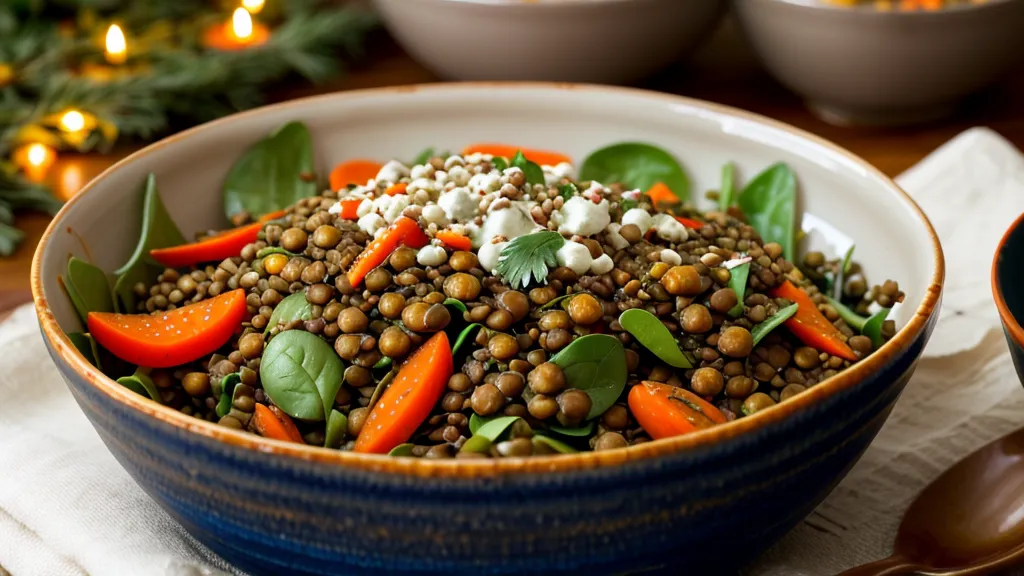
By the time the big family dinners rolled around, I’d stopped trying to fake high-carb sides and started bringing something naturally low-GI that stands on its own — a warm lentil salad with roasted root vegetables and a lemon-tahini dressing. My brother-in-law, who doesn’t think a meal counts without white rice, went back for seconds without realizing what he was eating. He just thought it tasted good. If your household isn’t eating the same way you are, how I stay low-GI while my partner eats sourdough covers the part where you’re cooking for two different plates at once.
The Walk That Makes the Difference
On the nights when swapping stuffing for lentils isn’t an option — when the meal itself doesn’t bend — a walk around the block after dinner does roughly the same job as eating protein first, just from the other direction. It’s the one lever that still works when the table gives you no other choices, which is most of why I default to a lap around the neighborhood before anyone cuts the pie.
There was a stretch this past winter when I reached for a pair of jeans that had been exiled to the back of my closet since before the diagnosis, and they went on standing up — no wriggling around on the bed required. It had nothing to do with a scale and everything to do with all those after-dinner laps and eggs eaten before parties instead of during them.
New Year’s Eve, I ordered the salmon at a restaurant here in Seattle, asked for extra greens instead of the potato gratin, and didn’t spend the meal negotiating with myself the way I used to. I still catch the smell of a fresh dinner roll and pause half a second too long — that part hasn’t gone away, and I don’t expect it to.
So here’s what I’d tell anyone walking into their first holiday season with this diagnosis: skip the deprivation plan entirely. Eat protein before the treats show up, walk off the meals that won’t bend to your preferences, bring one dish you’re genuinely proud of instead of apologizing for the rest of the table, and stop treating a single plate of stuffing like it erases months of work. That’s the actual trick. Not willpower — order.